Product Overview
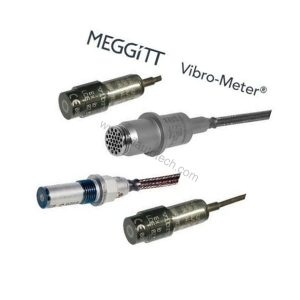
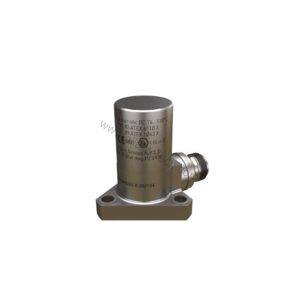
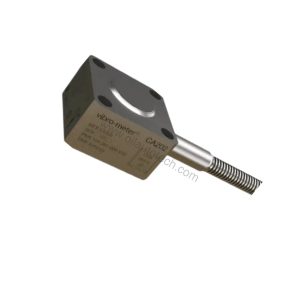
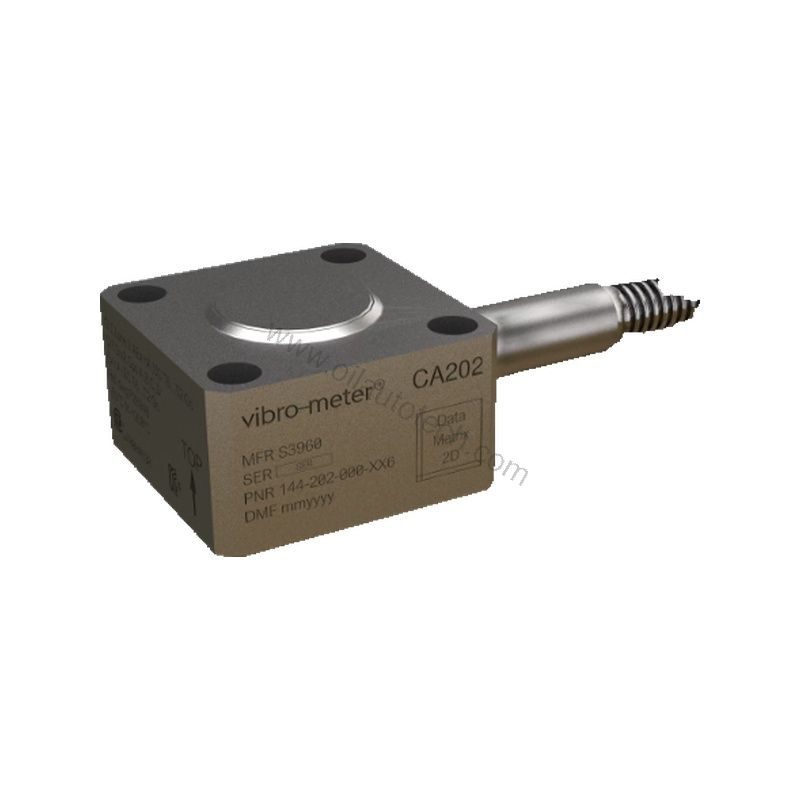
When a turbine, compressor or gearbox starts shaking, every hour of downtime costs money. The 144-202-000-216 is the Vibro Meter CA202 piezoelectric accelerometer — a heavy-duty vibration sensor built for exactly that moment. It belongs to the Meggitt vibro-meter® product line and uses a symmetrical shear-mode polycrystalline measuring element with internal case insulation. The result is a charge-output sensor that keeps delivering clean data in hot, wet and corrosive industrial environments.
This specific part number is the standard version with a 6 m integral cable, terminated with flying leads. It needs no input power, so you can mount it and start measuring.
Key Specifications That Matter
| Parameter | Value |
|---|---|
| Sensitivity | 100 pC/g ±5% |
| Frequency response | 0.5 to 6000 Hz (±5%) |
| Dynamic measurement range | 0.01 to 400 g peak |
| Temperature range (sensor) | −55 to +260°C |
| Case material | Austenitic stainless steel |
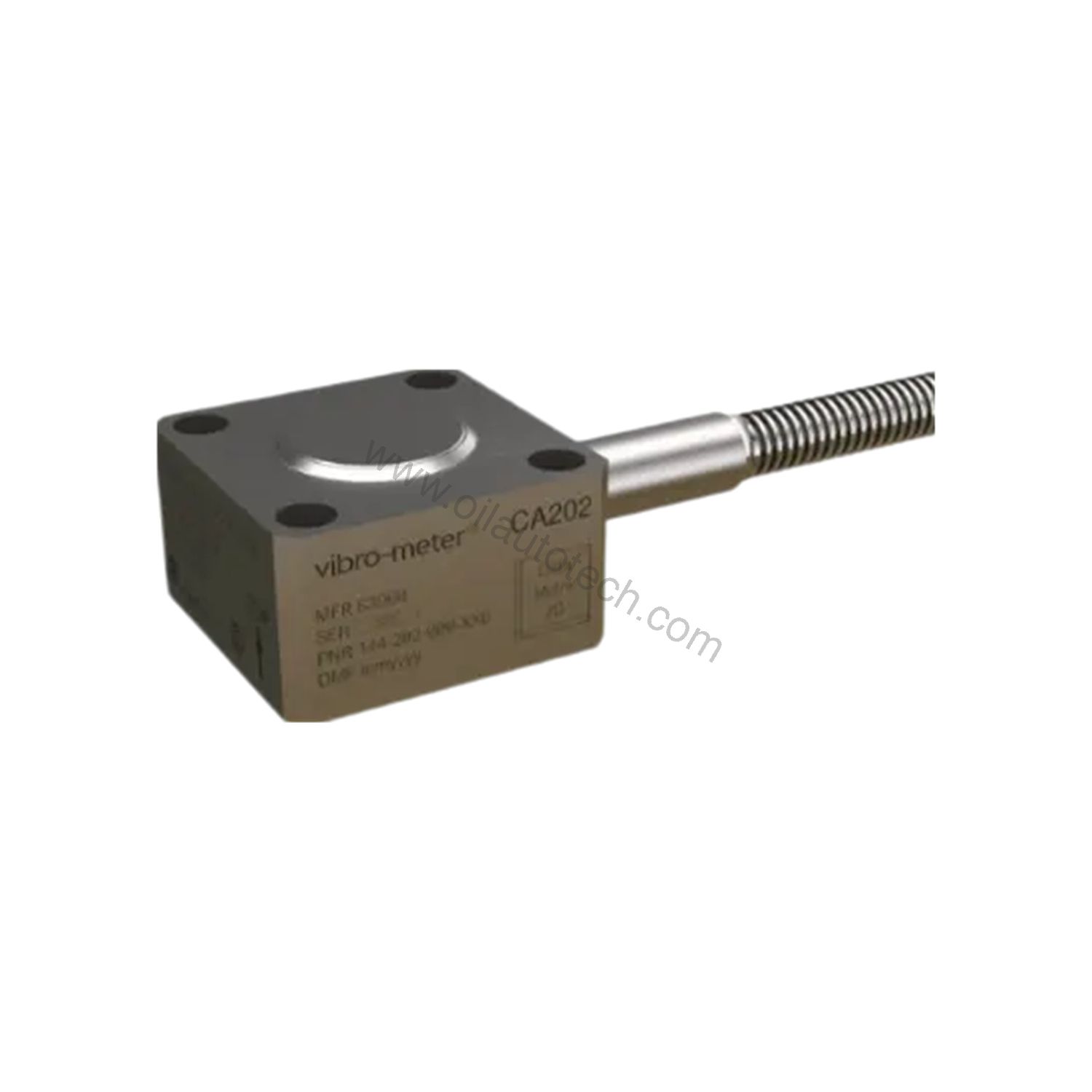
Sensitivity of 100 pC/g means a strong signal even at low vibration levels, which helps you catch early bearing wear. The 0.5 to 6000 Hz band covers the low-frequency rotation harmonics and the high-frequency signatures that indicate lubrication problems. Linearity stays within ±1% from 0.01 to 20 g peak and ±2% from 20 to 400 g peak, so the data stays trustworthy across the full range.
Built for Harsh Plant Conditions
The sensor and its flexible stainless-steel protection hose are hermetically welded into one sealed assembly. That construction resists 100% relative humidity, water, steam, oil and sea-salt atmospheres, plus dust, fungus and sand. The sensor survives continuous operation from −55 to +260°C, while the integral cable handles −55 to +200°C. Short-term survival extends further, to +280°C for the sensor and +250°C for the cable.
Mounting uses four M6 × 35 Allen screws and four M4 spring-lock washers at a nominal tightening torque of 15 Nm. The sensor weighs about 250 g, and the cable adds roughly 135 g/m.
CA202 vs. Other Accelerometer Types
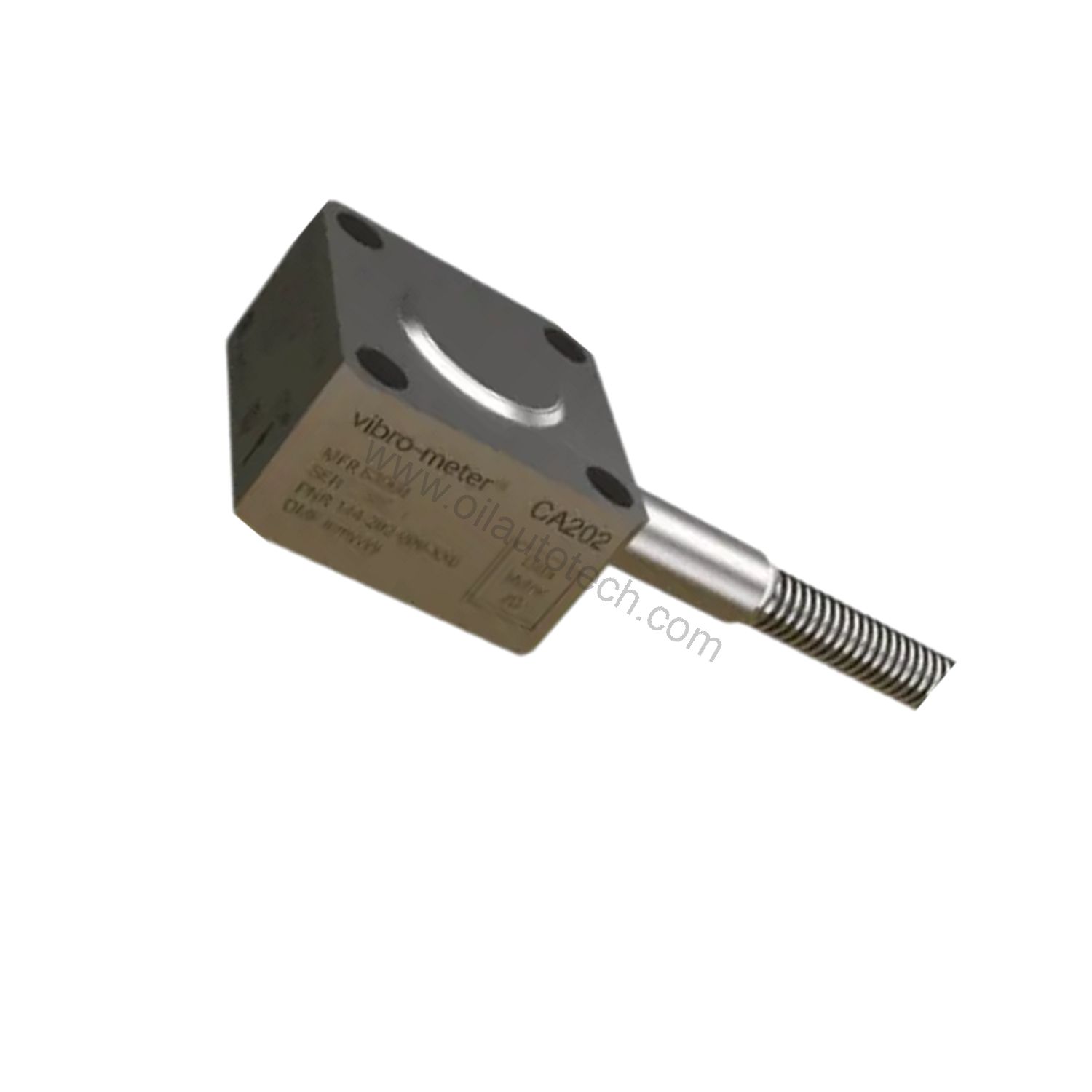
- Piezoelectric (charge output, like the CA202): no input power, wide temperature range, excellent for high-temperature machinery monitoring.
- IEPE/voltage-output accelerometers: simpler cabling, but limited by built-in electronics that cannot match the CA202’s +260°C ceiling.
- Velocity sensors: good for low-frequency measurements, but bulkier and narrower in frequency span.
If your measurement point runs hot or sits in a hazardous area, the charge-output design of the CA202 is the practical choice.
Integration and Signal Conditioning
The CA202 uses a 2-pin system, insulated from case, with charge output. It pairs with a charge converter such as the IPC70x signal conditioner. Note that the lower cutoff frequency is set by the signal conditioner you choose, so confirm the matching unit before commissioning. For hazardous areas, Ex versions of the CA202 exist; this part number is the standard version for non-hazardous locations. Please verify current lifecycle status and availability with Oil AutoTech before ordering.
Selection Checklist
Before you buy, confirm the mounting thread pattern, the cable length you need, and whether your area is classified as hazardous. The CA202 comes in standard and Ex versions, so the environment decides the variant. If you need hands-on technical selection help, the team at Oil AutoTech can match the right signal conditioner and mounting hardware to your application.
Contact Oil AutoTech today for pricing and availability.