Product Overview
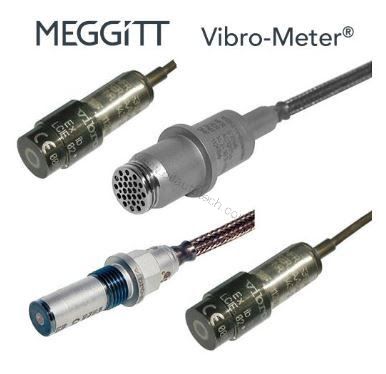
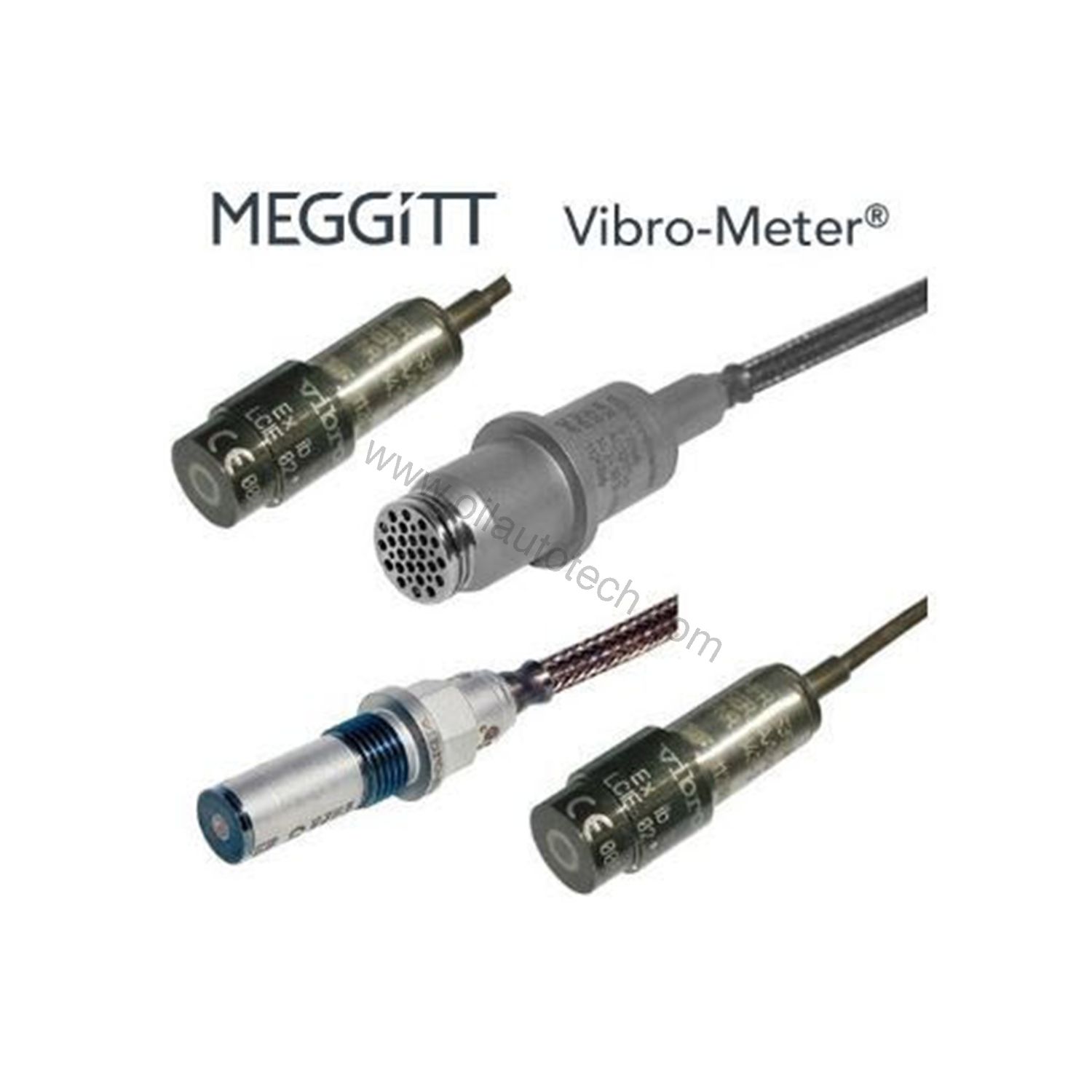
Gas turbine operators know that dynamic pressure monitoring in extreme heat demands a transducer that simply does not drift. The Vibro Meter CP 216, ordered under part number 143-216-000-151, is a compression-mode piezoelectric pressure transducer built for exactly that environment. It uses man-made piezoelectric material to deliver an extremely stable charge output with no input power requirements, making it a practical choice for long-term monitoring and development testing where reliability matters more than anything else.
Technical Specifications
The CP 216 delivers a typical sensitivity of 200 pC/bar (13.8 pC/psi) at 2 Hz. Its dynamic measuring range spans 0.0005 bar to 250 bar (0.007 psi to 3626 psi), with overload capacity up to 350 bar (5076 psi) for static and dynamic spikes. Linearity stays within ±1% across that range, so your signal conditioner receives a clean, predictable charge signal.
Frequency response runs from 2 Hz to 15000 Hz at ±5%, and the resonant frequency exceeds 80 kHz. The transducer operates continuously from −54 to 470°C (−65 to 878°F), with extreme applications reaching −70 to 520°C (−94 to 968°F). Acceleration sensitivity is ≤ 0.5 pC/g, keeping vibration-induced errors low.
| Specification | Value |
|---|---|
| Sensitivity (typical, at 2 Hz) | 200 pC/bar (13.8 pC/psi) |
| Dynamic measuring range | 0.0005 bar to 250 bar (0.007 psi to 3626 psi) |
| Overload capacity (spikes) | Up to 350 bar (5076 psi) |
| Frequency response | 2 to 15000 Hz ±5% |
| Transducer temperature range | −54 to 470°C continuous; −70 to 520°C extreme |
| Linearity | < ±1% over dynamic measuring range |
Applications and Integration
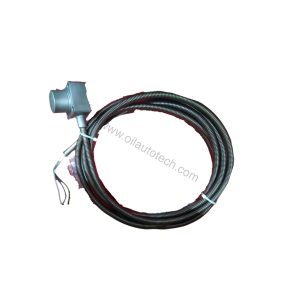
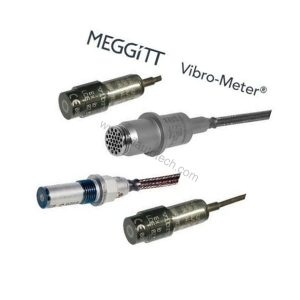
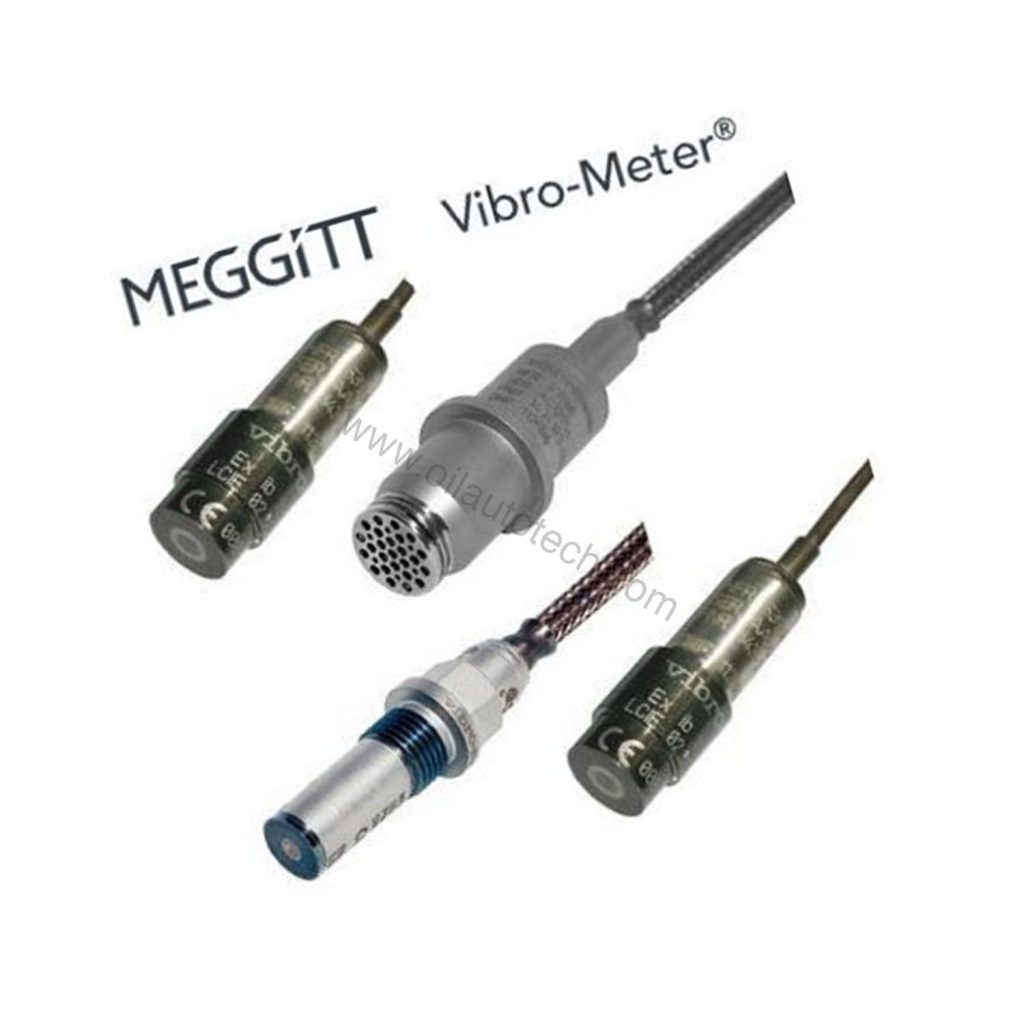
The CP 216 suits dynamic pressure monitoring over wide temperature ranges where high reliability is non-negotiable. Gas turbine combustion monitoring is the classic use case: the transducer sits close to the flame, enduring heat that would destroy ordinary sensors. The integral mineral insulated (MI) cable with twin conductors can be terminated with either a LEMO connector or the Vibro-Meter high-temperature connector. Cable assemblies are available to connect the transducer to an IPC 704 signal conditioner.
Because the output is a charge signal, you will need a charge converter for signal processing. The two-pole system is insulated from the casing, and internal case insulation supports clean signal transmission. The transducer is certified for use in potentially explosive atmospheres, so it fits hazardous-area installations where that certification is required.
Reliability and Selection
The housing uses NIMONIC alloy 90, hermetically welded, with INCONEL alloy 600 for the cable. This construction resists corrosion and humidity while surviving shock acceleration up to 2000 g peak (half sine, 1 ms duration) along the sensitive axis. Radiation tolerance is solid: gamma flux at 1010 erg/g and neutron flux at 1017 n/cm² produce no effect. Factory dynamic calibration at 1 bar peak and 2 Hz means no subsequent calibration is necessary.
When specifying the 143-216-000-151, confirm your cable length requirement (this ordering configuration includes a 3 m cable) and your connector preference. The transducer weighs just 12 g, while the cable adds 25 g/m. If you need hands-on technical selection help or fast-dispatch spares for oil, gas and industrial automation applications, contact Oil AutoTech today for pricing and availability.
Frequently Asked Questions
What makes the CP 216 suitable for gas turbine monitoring?
Its continuous temperature range of −54 to 470°C and extreme capability to 520°C let it operate close to combustion zones where standard transducers fail. The 200 pC/bar sensitivity and 2 Hz to 15 kHz frequency response capture both low-frequency pulsations and high-frequency dynamics.
Does the 143-216-000-151 require external power?
No. Input power requirements are none. It produces a charge output that a charge converter or signal conditioner such as the IPC 704 processes.
What connector options are available?
The transducer can be terminated with a LEMO connector or a Vibro-Meter high-temperature connector. The LEMO version handles −55 to 155°C, while the Vibro-Meter connector extends to −70 to 650°C.
How is the transducer calibrated?
Vibro Meter performs dynamic calibration at the factory at 1 bar peak and 2 Hz (+23°C). No subsequent calibration is necessary.
Can I use it in explosive atmospheres?
Yes. The CP 216 is certified for use in potentially explosive atmospheres. Verify your specific area classification and certification requirements with Oil AutoTech before ordering.