When Vibration Data Goes Missing on a Critical Turbine
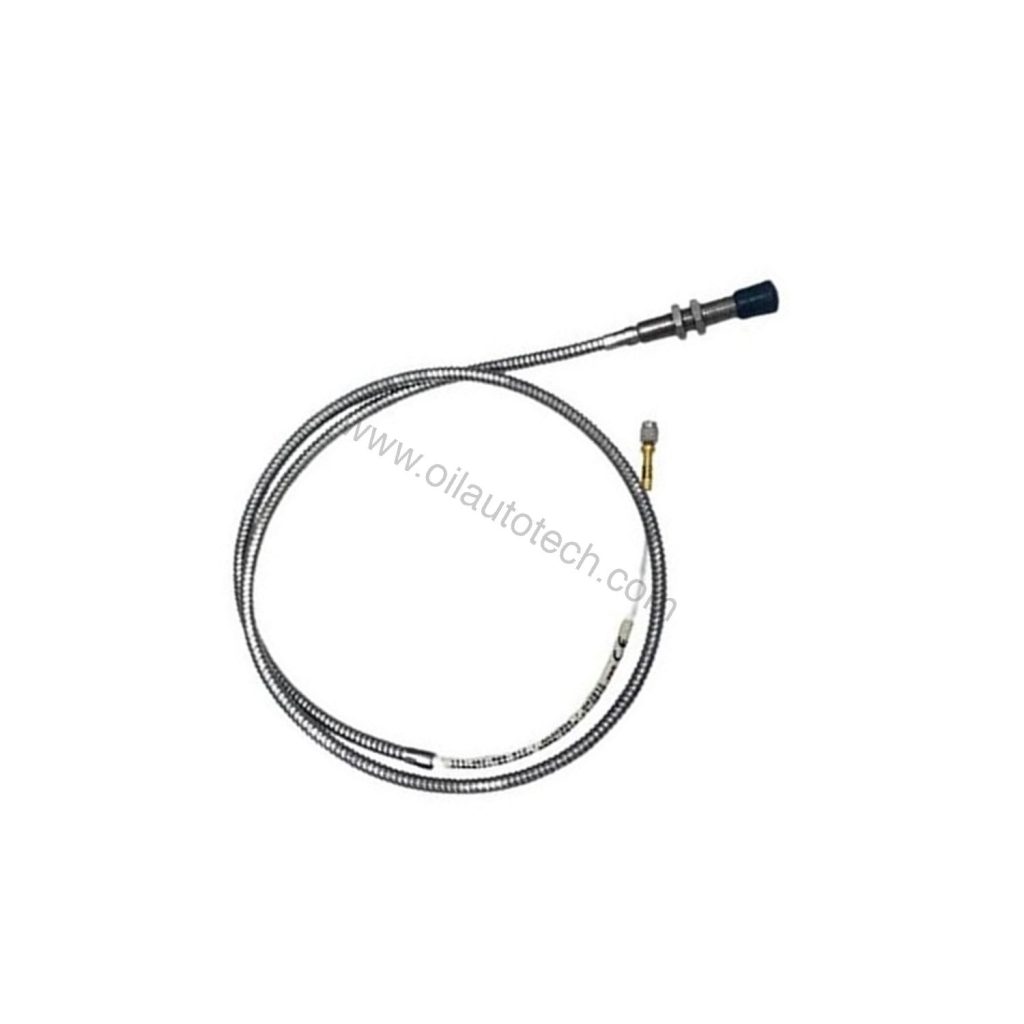
A gas plant loses reliable shaft vibration readings on a critical turbine. The existing probe has drifted, and the monitoring system is throwing intermittent alarms. Operations needs a replacement that matches the original measurement chain exactly, without a long lead time. The 111-402-000-013-A1-B1-C165-D080-E050-F0-G000-H05 from Vibro-Meter (Meggitt) is built for this scenario.
This proximity measuring system uses the eddy-current principle for non-contact shaft relative vibration and gap/position measurement. It conforms to API 670 recommendations, so it slots into machinery protection and condition monitoring chains without re-engineering the installation.
What the Part Number Tells You
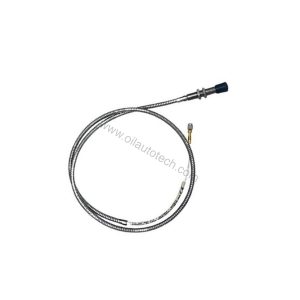
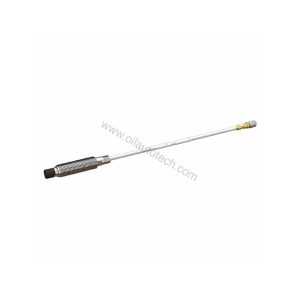
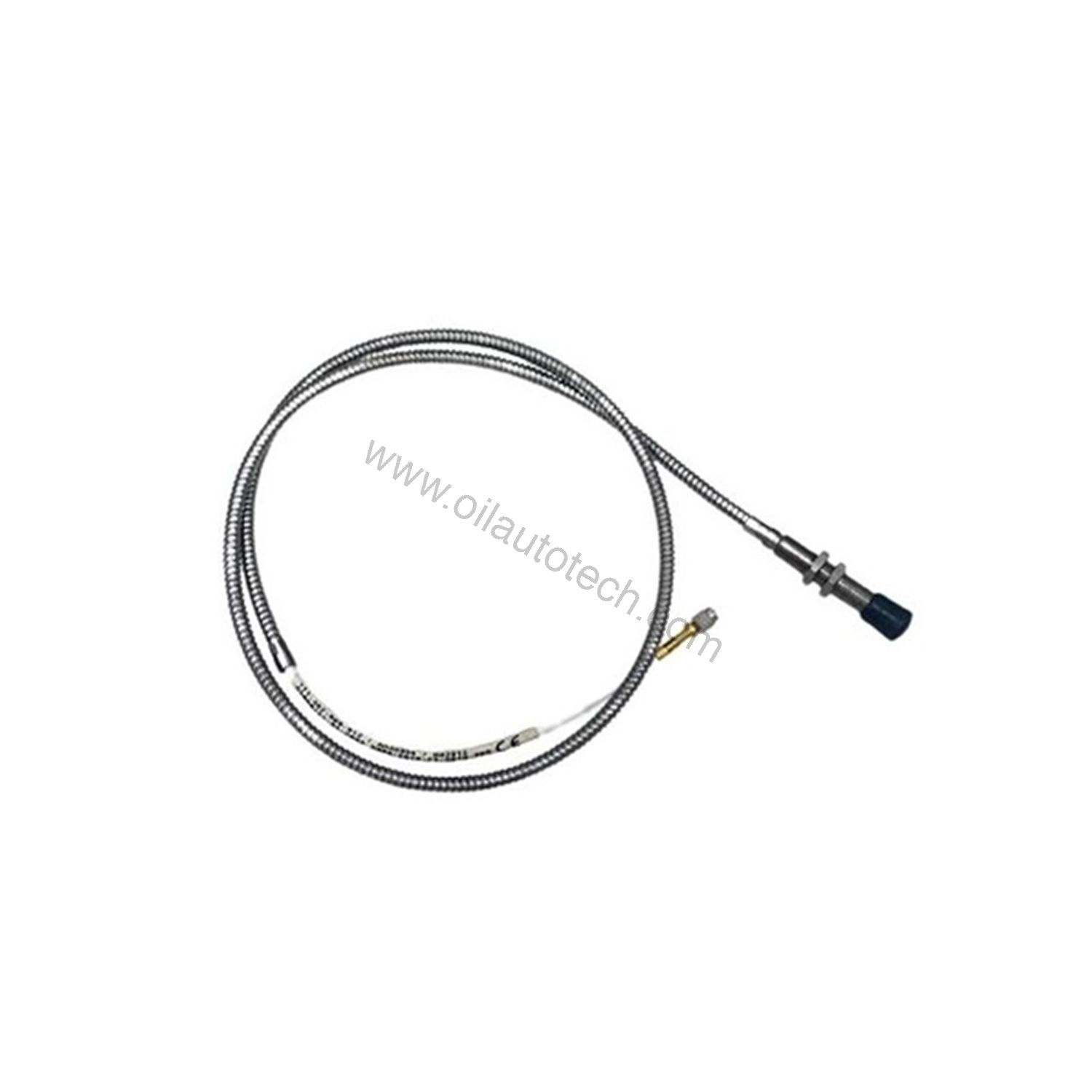
The suffix string encodes the exact configuration. Environment (A) is 1 = Standard. Body thread (B) is 1 = M10 × 1. Body length (C) is 165 mm, with an unthreaded length (D) of 80 mm. Integral cable length (E) is 5.0 m ±500 mm. Optional protection (F) is None, flexible hose length (G) is None, and total system length (H) is 5 m. The unit weighs 0.22 kg.
Because the part number is fully specified, there is no ambiguity about thread, length, or cable. That matters when you are matching a probe to an existing mounting block and extension cable run.
Technical Specifications
| Specification | Value |
|---|---|
| Product Type | Proximity Measuring System |
| Measurement Principle | Eddy-current, non-contact |
| Body Thread | M10 × 1 |
| Body Length | 165 mm |
| Unthreaded Length | 80 mm |
| Integral Cable Length | 5.0 m ±500 mm |
| Total System Length | 5 m |
| Weight | 0.22 kg |
| Operating Temperature (Transducer) | −40 to +180 °C, drift <5% |
| Short-Term Survival | +180 to +220 °C, drift >5% |
| Transducer and Cable (Ex Zone) | −40 to +195 °C |
| Cable, Connector, Optional Protection | −40 to +200 °C |
| Frequency Response | DC to 20 kHz (−3 dB) |
| Measurement Range | 2 or 4 mm |
| Protection Rating (Head) | IP68 |
| Vibration | 5 g peak, 10 to 500 Hz |
| Shock | 15 g peak, half sine-wave, 11 ms |
Why the Eddy-Current Design Matters
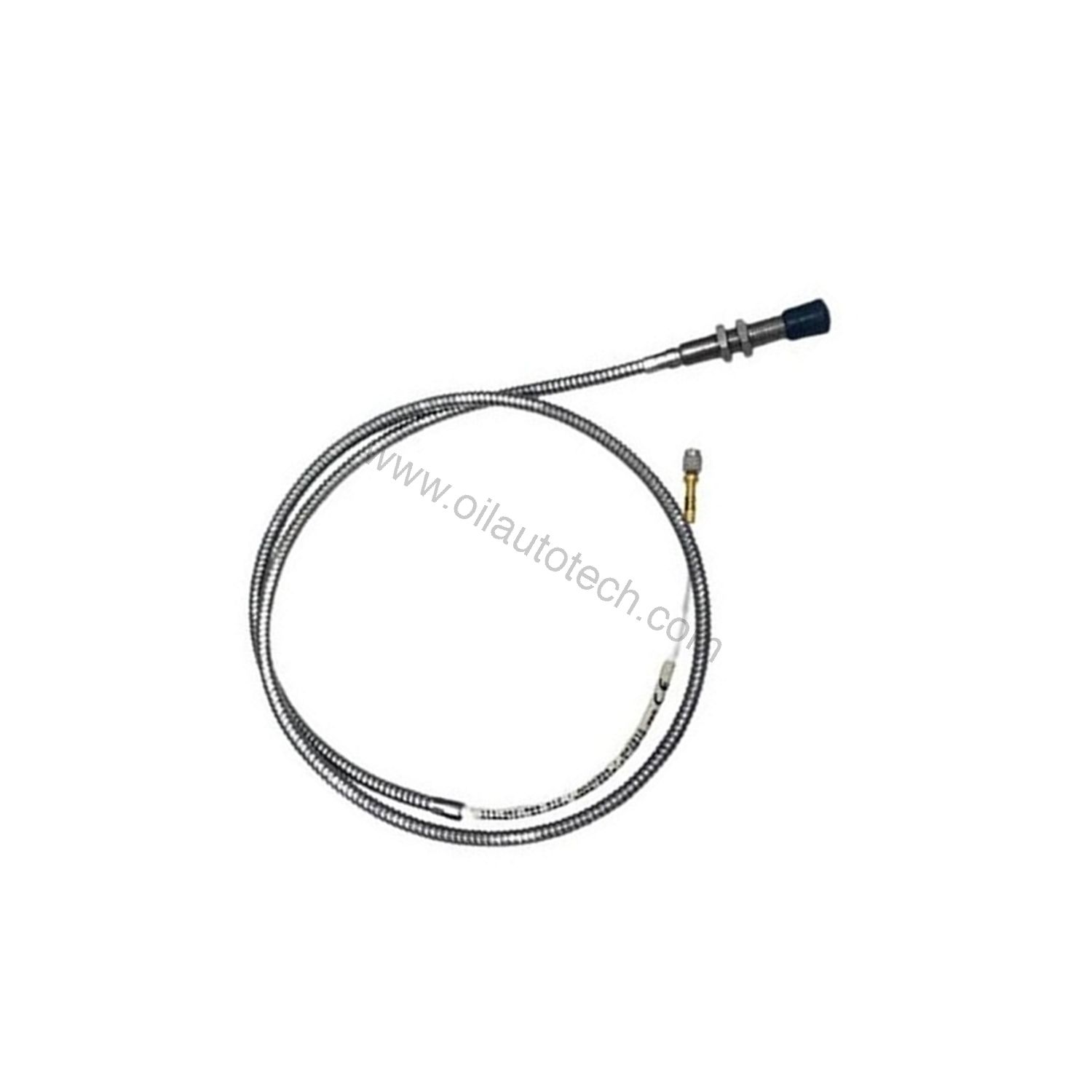
The transducer uses a wire coil with a Torlon (polyamide-imide) tip, encapsulated in a stainless steel body (AISI 316L) with high-temperature epoxy glue. That construction supports the −40 to +180 °C operating range with drift under 5%. For short-term survival, the transducer handles +180 to +220 °C, though drift exceeds 5% in that band. In an Ex Zone, the transducer and cable are rated −40 to +195 °C.
The head of the proximity transducer, including the tip and integral cable, carries an IP68 rating. Vibration tolerance is 5 g peak between 10 and 500 Hz, and shock tolerance is 15 g peak (half sine-wave, 11 ms duration). These are the kinds of numbers that keep a measurement chain alive on a machine that shakes.
Fitting Into the Monitoring Chain
The transducer requires a high-frequency power source from an IQS900 signal conditioner. Output is voltage or current with short-circuit protection. The system is ideal for use with VM600Mk2/VM600 and VibroSmart machinery monitoring systems, and it supports API 670 applications.
The integral and extension cables are FEP-covered 70 Ω coaxial cable, Ø3.6 mm. Connectors are self-locking miniature coaxial types. When connecting, hand-tighten until locked. If you are wiring into a plant network, confirm any gateway or connection module needs with your supplier before ordering.
Where This System Earns Its Keep
In oil and gas, this probe suits compressor and turbine trains where API 670 compliance is specified. In power generation, it fits steam and gas turbine monitoring chains. In industrial automation, it supports condition monitoring on high-value rotating equipment where a 5 m system length reaches the junction box without an extension.
For replacement and upgrade projects, the fully specified part number reduces the risk of a mismatch. If you are migrating an older chain to VM600Mk2 or VibroSmart, the 111-402-000-013-A1-B1-C165-D080-E050-F0-G000-H05 gives you a known configuration to work from.
Selection Checks Before You Buy
Verify the signal conditioner model, cable length required, and thread compatibility with your mounting. Confirm the operating temperature at the probe location against the −40 to +180 °C range. Check whether the Ex Zone rating applies to your area. If you need help matching this probe to an existing chain, contact Oil AutoTech for hands-on technical selection support.
Please verify current lifecycle status and availability with Oil AutoTech before ordering.