Introduction
Machine builders once relied on mechanical cams and limit switches to track position and speed. As production lines accelerated, those methods could not keep pace. The Allen-Bradley 1769-HSC emerged from that shift, giving CompactLogix and MicroLogix 1500 users a dedicated high-speed counter module that handles fast pulse signals with precision.
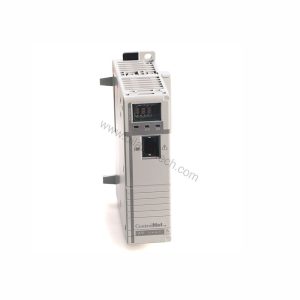
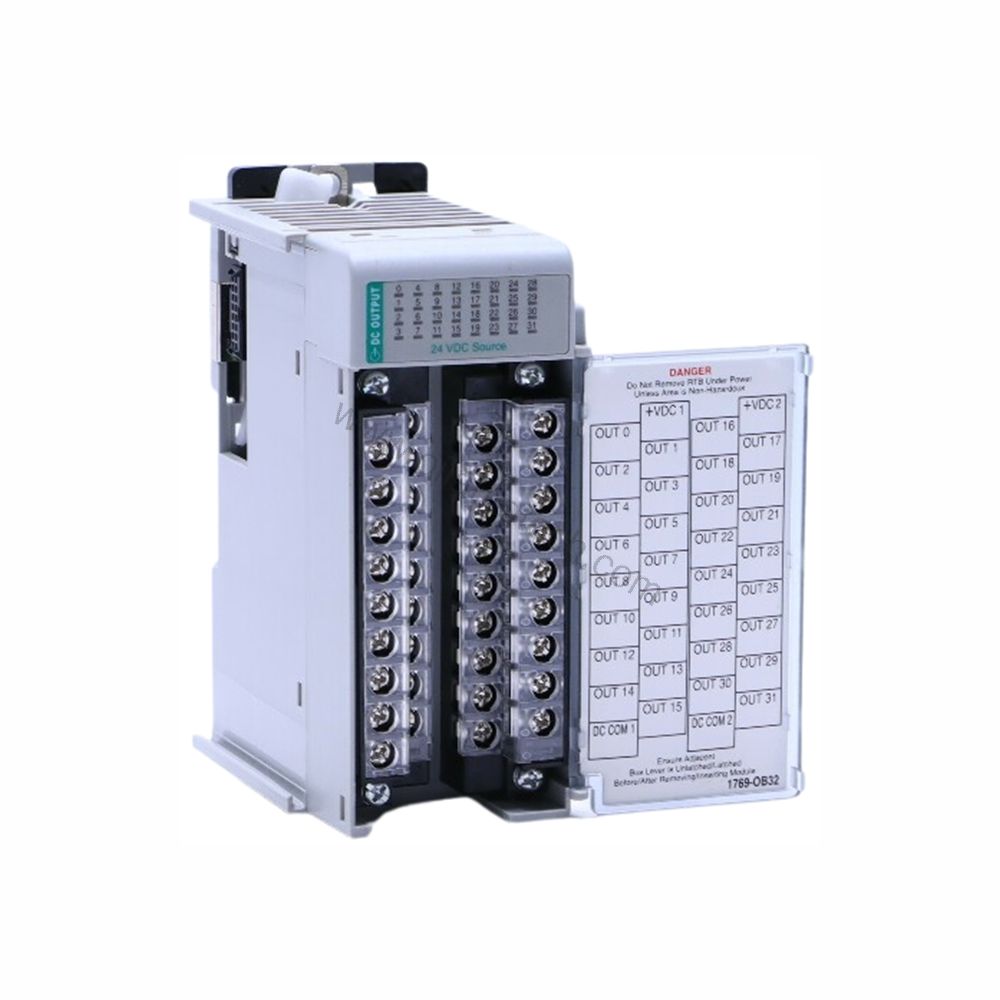
This module belongs to the 1769 Compact I/O family from Allen-Bradley / Rockwell Automation. It functions as a counter module for applications that demand accurate counting, position monitoring, and high-speed control. Oil AutoTech supplies this unit as a ready-to-ship spare for oil, gas, and industrial automation teams that cannot afford downtime.
Technical Specifications
Key Parameters
| Specification | Value |
|---|---|
| Inputs | 2 quadrature (ABZ) differential |
| Outputs | 16 total (4 physical, 12 virtual) |
| Input Frequency | 1 MHz |
| Input Voltage Range | 2.6…30V DC |
| Output Voltage Range | 5-30V DC |
| On-State Current | 1 A per point; 4 A per module |
| Bus Current Draw @ 5.14Vdc | 425 mA |
| Bus Current Draw @ 24Vdc | 0 mA |
| Isolation Voltage | 75V continuous, reinforced |
| Operating Temperature | 0-60 °C |
| Dimensions | 118 x 35 x 87 mm |
| Shipping Weight | 130 g |
What These Specs Mean in Practice
The 1 MHz input frequency lets the module capture pulses that standard I/O cannot resolve. Two quadrature differential inputs accept encoder feedback directly, so you can measure position, speed, and direction without extra signal conditioning. The 4 physical sourcing outputs handle high-speed control tasks, while the 12 virtual outputs give you additional counting flexibility in software. With a 425 mA draw at 5.14Vdc and 0 mA at 24Vdc, power budgeting stays predictable.
Where the 1769-HSC Fits
Oil and gas operations often need to totalize flow from turbine meters or track valve position on fast-acting actuators. The 1769-HSC handles those tasks because its differential inputs reject electrical noise common in harsh environments. In packaging lines, the module reads encoder pulses to synchronize cutters and registration marks at production speed. For test benches, it captures short-duration events with a minimum pulse width of 250 ns, giving engineers reliable data for validation work.
Installation and Setup
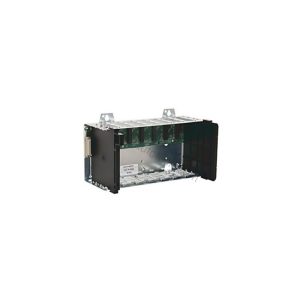
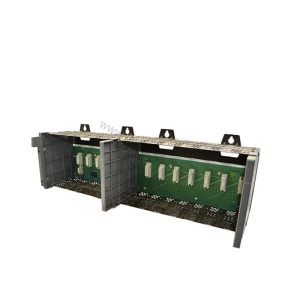
Mount the module in a 1769 Compact I/O chassis alongside your CompactLogix or MicroLogix 1500 controller. Keep it within four modules of the system power supply, as the power supply distance rating requires. Use individually shielded, twisted-pair cable for encoder or sensor connections. Wire sizes from 0.32 to 2.1 mm² (22…14 AWG) solid copper or 0.32 to 1.3 mm² (22…16 AWG) stranded copper with 90 °C insulation are acceptable. The module does not support removal under power, so always de-energize the chassis before installation or replacement.
Compatibility and Integration
The 1769-HSC works with CompactLogix and MicroLogix 1500 controllers. It communicates through the backplane, so no separate network configuration is needed. If your system uses a fieldbus network, confirm gateway and cabling requirements with your supplier before ordering. The open-style enclosure means the module must live inside a protective panel.
Selection Checklist
Before purchasing, verify your controller platform, required input frequency, and output count. Confirm that your encoder or sensor provides differential ABZ signals within the 2.6…30V DC range. Check available chassis space and power supply distance. Oil AutoTech offers hands-on technical selection help to match the 1769-HSC to your application. Contact Oil AutoTech today for pricing and availability.
Please verify current lifecycle status and availability with Oil AutoTech before ordering.