Product Overview
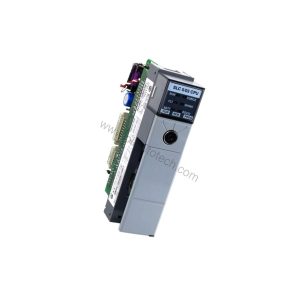
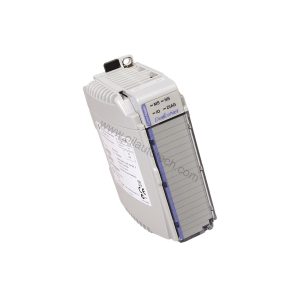
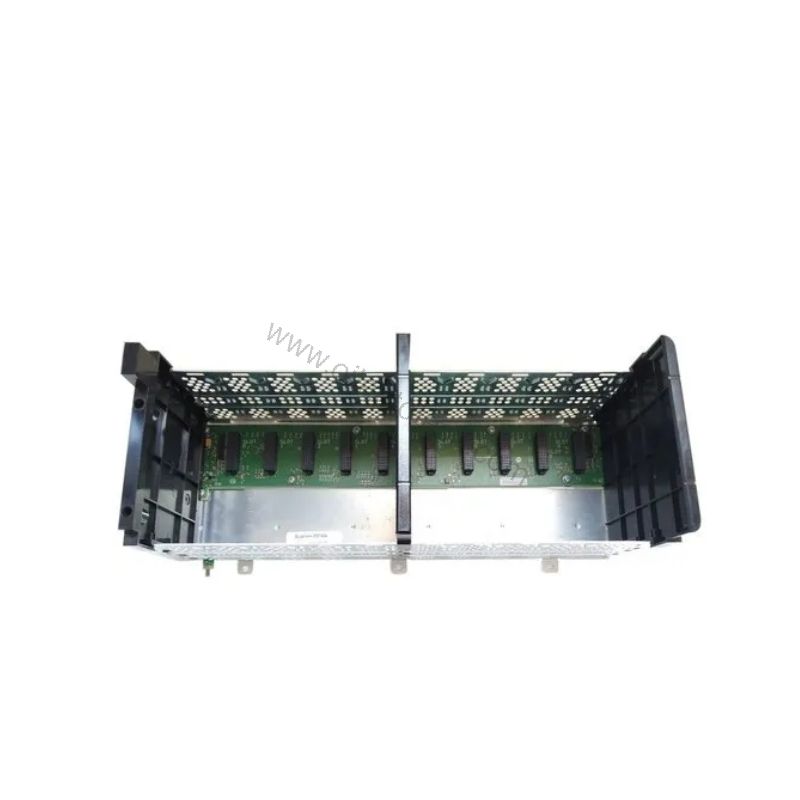
When a ControlLogix chassis needs deterministic output control, the Allen-Bradley 1756-OB16IS delivers. This scheduled isolated output module combines 16 individually isolated points with 8 scheduled outputs, giving machine builders and plant engineers precise timing for high-speed sequencing and coordinated motion tasks. It slots directly into a standard 1756 chassis and operates from a 10-30V DC supply.
Technical Specifications
The 1756-OB16IS carries a 12/24V DC sink/source voltage category and draws 350 mA at 5.1V and 2.5 mA at 24V from the backplane. Each point handles a nominal 1A/2A at 30/60 °C, with 8A/4A maximum current on the module and a 4A surge current for 10 ms repeatable every 2 seconds. Signal delay is 1 ms OFF-to-ON and 2 ms ON-to-OFF. Isolation between outputs-to-backplane and output-to-output is rated 250V using basic-type insulation, routine-tested at 1350V AC for 2 seconds. The module is designated T4A (North America) and IEC T4 temperature codes, with a 60 °C maximum ambient temperature and open-style enclosure.
| Specification | Value |
|---|---|
| Outputs | 16 individually isolated, 8 scheduled |
| Voltage Category | 12/24V DC sink/source |
| Operating Voltage | 10-30V DC |
| Current Draw (5.1V) | 350 mA |
| Current Draw (24V) | 2.5 mA |
| Pilot Duty | 2A (DC-13SQ) |
| Isolation | 250V outputs-to-backplane and output-to-output |
| Max Ambient Temperature | 60 °C (140 °F) |
| Enclosure Type | None (open-style) |
Comparison: Scheduled vs. Standard Output Modules
- Scheduling capability: The 1756-OB16IS provides 8 scheduled outputs synchronized within 16.7s Coordinated System Time (CST); standard output modules lack this deterministic scheduling.
- Isolation: All 16 points are individually isolated; many standard modules offer only group isolation.
- Fault states: Hold last state, On, or Off — with Off as the default.
- Voltage range: 10-30V DC operating range supports both 12V and 24V DC field devices.
Installation and Setup
Mount the module in any available 1756 chassis slot. Because it is an open-style module, install it inside a suitable enclosure that meets your facility’s environmental requirements. Verify that the backplane power budget accounts for the 350 mA draw at 5.1V. Field wiring should follow the terminal assignments for the 36-pin configuration. When integrating scheduled outputs, confirm that the controller’s Coordinated System Time is properly configured, as the 8 scheduled outputs depend on this architecture.
Maintenance and Reliability
The 1756-OB16IS is built for demanding industrial environments, tested to withstand 2G operational vibration and 30G shock. Periodic inspection of terminal connections and enclosure conditions is recommended. Keep ambient temperature below the 60 °C maximum to maintain rated performance. The 250V isolation and 1350V AC routine test underscore the module’s suitability for mixed-signal panels where output separation matters.
Compatibility and Integration
This module is part of the ControlLogix platform and communicates over the backplane with the host controller. No external communication protocol is used at the module level. For networked architectures, confirm gateway and cabling requirements with your supplier before commissioning.
Selection Guide
Before ordering, verify your chassis has an open slot, your field devices fall within the 10-30V DC range, and your application benefits from scheduled outputs. If you need fast dispatch for oil, gas, or industrial automation spares, contact Oil AutoTech today for pricing and availability.
Frequently Asked Questions
Q: What makes the 1756-OB16IS different from a standard 16-point output module?
A: It offers 8 scheduled outputs synchronized within 16.7s CST, plus all 16 points are individually isolated.
Q: What is the operating voltage range?
A: 10-30V DC, with a 12/24V DC sink/source voltage category.
Q: How much backplane current does it draw?
A: 350 mA at 5.1V and 2.5 mA at 24V.
Q: What is the maximum ambient temperature?
A: 60 °C (140 °F).
Q: What fault states are available?
A: Hold last state, On, or Off, with Off as the default.