The Evolution of Non-Contact Measurement in Rotating Machinery
For decades, oil and gas operators relied on periodic manual inspections to catch machine faults. That approach changed as turbines, compressors, and pumps grew faster and more complex. Eddy-current proximity measurement emerged as the practical answer, and the Vibro Meter 111-902-000-013 proximity measuring system carries that evolution forward. Built around the TQ902 sensor, this Meggitt (Vibro-Meter) chain delivers non-contact displacement data with the reliability that modern condition monitoring demands.
What Makes This Measuring Chain Practical
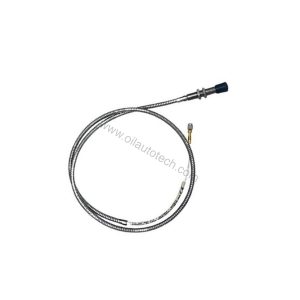
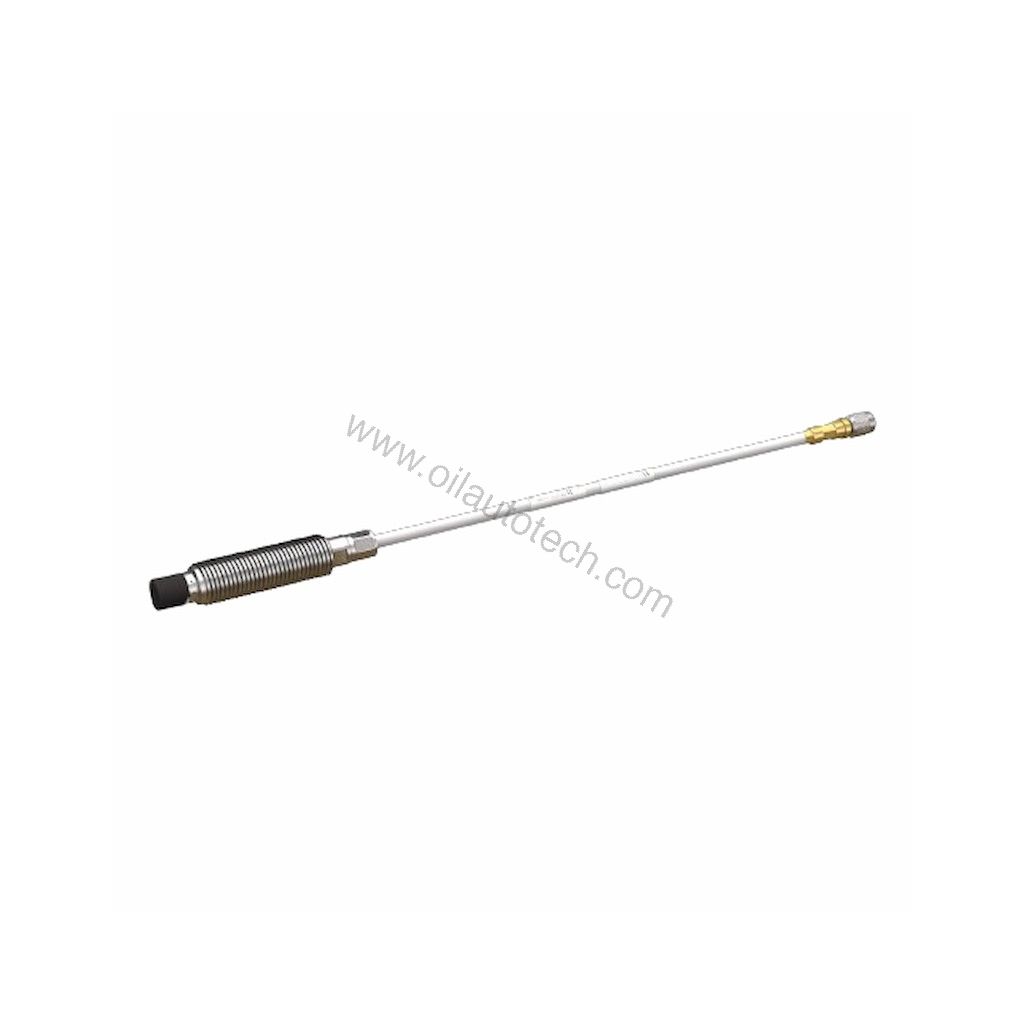
The 111-902-000-013 pairs a TQ902 proximity sensor with a 5 m total system length. Its M10 × 1 body thread and 42 mm body length suit standard mounting arrangements, while the 500 mm integral cable with flexible FEP-sheathed hose simplifies routing in tight machine housings. The sensor head is rated IP68, so moisture and dust ingress stay out of the measurement path. A temperature-compensated design keeps drift below 5% across −30 to 150°C, and the sensor itself operates from −40 to 180°C with short-term survival to 220°C for up to two hours.
Technical Specifications
| Parameter | Value |
|---|---|
| Sensor model | TQ902 |
| Body thread | M10 × 1 |
| Body length | 42 mm |
| Integral cable length | 500 mm ±50 mm |
| Total system length | 5 m |
| Linear measurement range | 2 or 4 mm |
| Frequency response | DC to 20 kHz (−3 dB) |
| Sensor temperature range | −40 to 180°C |
| Protection rating | IP68 (sensor head) |
| Weight | 0.22 kg |
Where This System Earns Its Keep
In a refinery, a compressor train running at high speed needs continuous radial vibration data. The 111-902-000-013 feeds that data to an IQS900 signal conditioner, which supplies the high-frequency power the sensor requires. On a gas pipeline, the same chain monitors axial displacement on a critical pump, and the current-signal transmission supports runs up to 1 km without losing integrity. For offshore platforms, the stainless-steel hose with FEP sheath resists chemicals, moisture, and mechanical wear. Each scenario reflects the same priority: fast, reliable measurement that keeps production online.
Integration and Selection Notes
The TQ902 sensor connects through self-locking miniature coaxial connectors, hand-tightened until locked. It requires a high-frequency power source from an IQS900 signal conditioner, and the chain conforms to API 670 5th edition. If you plan to route data into a plant network, confirm gateway and cabling requirements with your supplier. For functional safety contexts, the system suits SIL 2 (IEC 61508) and Cat 1 PL c (ISO 13849) applications. Before ordering, verify the 2 mm or 4 mm linear range matches your target clearance, and confirm the 5 m chain length fits your installation. Contact Oil AutoTech today for pricing and availability.
Keeping the Chain Reliable
Inspect the sensor tip and cable periodically for mechanical damage. The FEP sheath resists most chemicals, but physical abrasion near the mounting point deserves attention. Keep calibration records at the reference temperature of +23°C ±5°C. When spares are needed, fast dispatch worldwide keeps downtime short.
Please verify current lifecycle status and availability with Oil AutoTech before ordering.