
Why the STBDAI7220 Still Matters in Modern Automation
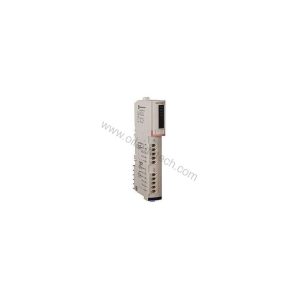
The STBDAI7220 from Schneider Electric represents a critical piece of legacy automation infrastructure that continues to operate in thousands of industrial facilities worldwide. As a standard 2-channel 230V AC digital input module within the Advantys STB series, this component bridges the gap between traditional field devices and distributed control architectures. Despite its discontinued status, the STBDAI7220 remains essential for facilities running established Advantys STB networks that cannot justify full system migration.
Industrial operators face a persistent challenge: balancing the need for modern efficiency against the substantial capital costs of complete control system overhauls. The STBDAI7220 addresses this tension by offering reliable performance for existing installations while buyers plan their long-term modernization strategies. For maintenance managers and procurement specialists, securing genuine STBDAI7220 modules means protecting uptime without disrupting proven operational workflows.
Technical Specifications That Drive Operational Value
The STBDAI7220 delivers straightforward functionality optimized for industrial reliability. Its 2-channel configuration handles 230V AC signals compliant with IEC/EN 61131-2 Type 1 standards, making it suitable for a wide range of field input applications. The module provides 1780V AC field-to-bus isolation for one minute, ensuring safe separation between high-voltage field wiring and sensitive bus communications—a critical safety feature in mixed-voltage environments.
Hot swapping capability stands out as a significant maintenance advantage. Technicians can replace the STBDAI7220 without powering down the entire I/O segment, dramatically reducing mean time to repair during unexpected failures. The module draws 60 mA at 5V DC from the bus, placing minimal load on system power budgets. It operates with the STBXBA2000 I/O base at 18.4 mm width and pairs with the STBPDT2100 PDM module for 115/230V AC power distribution.
| Parameter | Specification |
|---|---|
| Model | STBDAI7220 |
| Brand | Schneider Electric |
| Series | Advantys STB |
| Channels | 2 |
| Signal Type | 230V AC, IEC/EN 61131-2 Type 1 |
| Isolation | 1780V AC field-to-bus for 1 minute |
| Hot Swapping | Yes |
| Bus Current | 60 mA @5V DC |
| I/O Base | STBXBA2000 (18.4 mm) |
| PDM | STBPDT2100 (115/230V AC) |
| Protection Rating | IP20 |
| Weight | 0.122 kg |
Business Impact: Protecting Your Automation Investment
Every hour of unplanned downtime carries substantial financial consequences for manufacturing operations. The STBDAI7220’s hot swapping feature directly addresses this risk by enabling rapid module replacement without disrupting adjacent I/O channels or requiring full segment shutdowns. For facilities running continuous processes, this capability translates into measurable cost avoidance and improved overall equipment effectiveness.

The IP20 protection rating suits the STBDAI7220 for installation within controlled cabinet environments, where it reliably handles 230V AC input signals from field devices such as limit switches, pushbuttons, and proximity sensors. Its lightweight 0.122 kg construction simplifies handling during maintenance activities, while the compact 18.4 mm width with the STBXBA2000 base maximizes panel space utilization—a valuable consideration for densely populated control cabinets.
From a total cost of ownership perspective, maintaining legacy Advantys STB systems with genuine STBDAI7220 modules often proves more economical than premature migration. The module’s straightforward 2-channel design reduces wiring complexity and commissioning time, while its robust isolation protects downstream electronics from field-side voltage transients. These factors combine to deliver dependable performance that extends the productive life of existing automation assets.
Application Scenarios Across Industries
In a typical packaging line application, the STBDAI7220 might monitor safety gate switches and emergency stop circuits operating at 230V AC. When a gate opens, the module’s isolated input detects the signal change and communicates it across the Advantys STB bus to the controlling PLC, triggering an immediate safe-stop sequence. The hot swap capability allows maintenance teams to replace a failed module during scheduled breaks without stopping production.
Water treatment facilities frequently employ the STBDAI7220 to interface with pump status contacts and valve position feedback sensors. The 230V AC input compatibility matches directly with field wiring common in these environments, eliminating the need for interposing relays. Meanwhile, automotive assembly operations use these modules to monitor conveyor zone occupancy sensors and operator interface stations, where the IP20 rating suits the protected cabinet installations typical of these applications.

Compatibility and Integration Considerations
The STBDAI7220 integrates seamlessly within existing Advantys STB architectures, requiring the STBXBA2000 I/O base for physical mounting and the STBPDT2100 PDM for 115/230V AC power distribution. This defined compatibility ensures straightforward replacement when matching original system configurations. The module’s 60 mA bus current draw at 5V DC must be accounted for when calculating total segment power budgets, particularly in densely populated I/O configurations.
Engineers should verify that their existing network infrastructure supports the Advantys STB communication protocol before specifying the STBDAI7220. Since Schneider Electric has superseded this series with the Modicon X80 range, facilities planning future expansions may need to evaluate migration pathways. However, for maintaining current operations, the STBDAI7220 remains fully functional within its designed ecosystem.
Frequently Asked Questions
Is the STBDAI7220 still available for purchase?
The STBDAI7220 is discontinued and superseded by the Modicon X80 range according to Schneider Electric’s lifecycle documentation. However, Oil AutoTech specializes in sourcing legacy automation components, so availability may exist through specialized channels. Contact our team to verify current stock and lead times for your specific requirements.
What makes the STBDAI7220 suitable for hot swap applications?
The STBDAI7220 supports hot swapping, meaning technicians can remove and replace the module while the system remains powered. This capability minimizes downtime during maintenance or unexpected failures. The 1780V AC field-to-bus isolation ensures safe separation during these procedures, protecting both personnel and sensitive bus electronics.
Which base and power distribution modules work with the STBDAI7220?
The STBDAI7220 requires the STBXBA2000 I/O base, which provides an 18.4 mm mounting width. For power distribution, pair it with the STBPDT2100 PDM module rated for 115/230V AC. Using these specified components ensures proper electrical and mechanical integration within your Advantys STB segment.
What input signal types does the STBDAI7220 accept?
This module accepts 230V AC digital input signals compliant with IEC/EN 61131-2 Type 1 specifications. It provides 2 input channels, making it suitable for monitoring field devices such as switches, sensors, and contacts that operate at this voltage level. The Type 1 classification indicates specific electrical characteristics for reliable signal detection.
Securing Your Legacy Automation Supply
Oil AutoTech understands the critical nature of maintaining legacy automation systems. We specialize in sourcing discontinued industrial components like the STBDAI7220, helping facilities avoid costly unplanned downtime. Our team verifies authenticity and provides responsive support for urgent requirements. When your Advantys STB system needs genuine Schneider Electric modules, trust our expertise to keep your operations running.