Product Overview
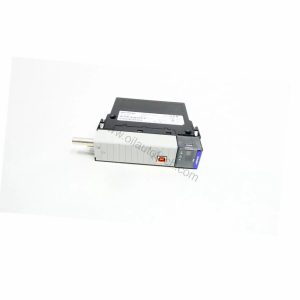
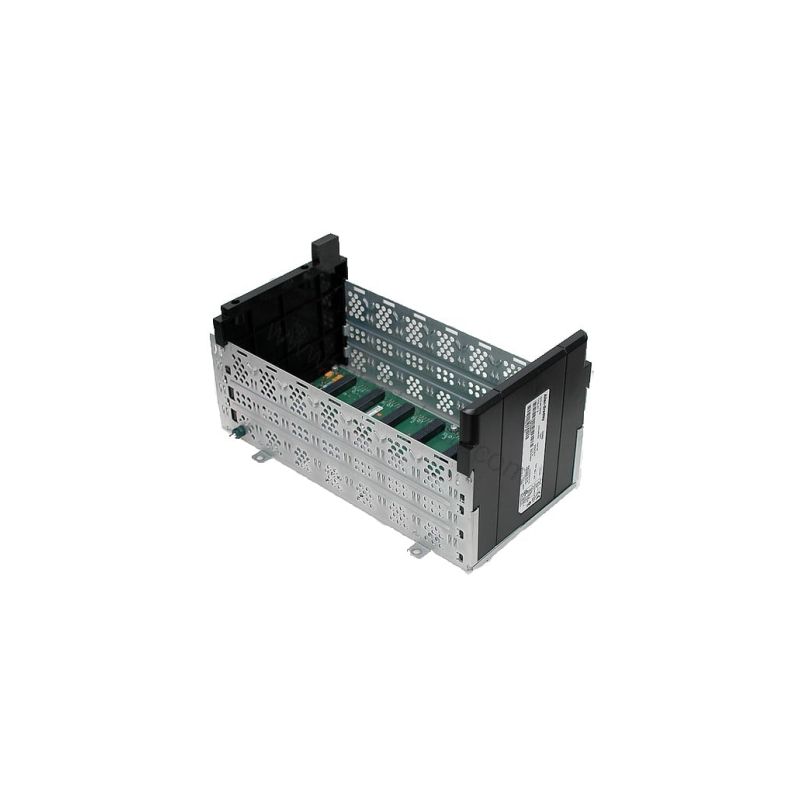
Downtime in a ControlLogix line rarely comes from the controller. It comes from the I/O layer, where analog signals from transmitters, transducers, and panel meters must be converted cleanly before the processor can act. The Allen-Bradley 1756-IF8 is a single-slot analog input module built for exactly that job. It belongs to the ControlLogix PAC family from Allen-Bradley / Rockwell Automation and provides Eight (8) input channels configurable for voltage or current signals.
For plants running continuous process loops, the cost of an unplanned stoppage dwarfs the price of the card itself. That is why sourcing a ready-to-ship replacement matters more than saving a few dollars on a slow channel.
Key Parameters and What They Cost You
The 1756-IF8 accepts -10…10V, 0…10V, 0…5V, and 0…20 mA input signals. That flexibility means one spare can cover multiple loop types across a facility, reducing the number of distinct cards you must stock. Fewer stocked variants translates directly into lower inventory carrying cost.
Resolution varies by range: ±10.25V delivers 320 µV/count (15 bits plus sign bipolar), 0…10.25V delivers 160 µV/count (16 bits), 0…5.125V delivers 80 µV/count (16 bits), and 0…20.5 mA delivers 0.32 µA/count (16 bits). Higher resolution on the lower ranges means tighter control of pressure, flow, and level loops, which reduces giveaway and rework.
Conversion uses the Sigma-Delta method, storing data in Integer mode (left justified, 2 s complement) or IEEE 32-bit floating point. The module draws 150 mA from the 5V backplane and 40 mA from the 24V backplane. Maximum power dissipation is 1.73 W in voltage mode and 2.33 W in current mode.
Scan time depends on wiring: 16-488 ms for single-ended, 8-244 ms for 4-point differential, and 5-122 ms for 2-point differential inputs. Faster scan on differential wiring can shorten control response time on fast loops.
Wiring Options and Application Fit
The 1756-IF8 supports single-ended, differential, and high-speed differential wiring. Single-ended wiring ties all input devices to a common ground and maximizes usable channels. Choose differential wiring when signal pairs are separate, common ground is unavailable, or the environment demands better noise immunity. High-speed mode differential wiring gives the fastest data updates but uses only one out of every four channels.
Typical applications include interfacing transmitters, transducers, signal splitters, signal isolators, and panel meters. Built-in features such as the module filter, under-range/over-range detection, process alarms, wire off detection, and rate alarms help catch faults before they become scrap.
Integration and Sourcing Notes
The module uses removable terminal blocks 1756-TBCH and 1756-TBS6H with user-defined mechanical keying. It installs in a local chassis alongside the controller or in distributed I/O racks. Most ControlLogix controllers support up to 4000 analog I/O signals, so scaling is rarely a constraint.
Integration Note: wiring into fieldbus networks may require an external gateway or connection module. Confirm cables and gateways with your supplier before commissioning.
Please verify current lifecycle status and availability with Oil AutoTech before ordering. Contact Oil AutoTech today for pricing and availability.