When Extreme Conditions Demand Proven Measurement
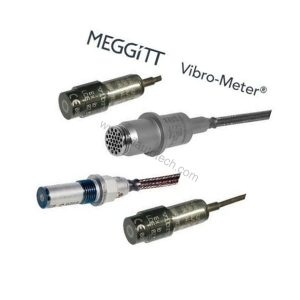
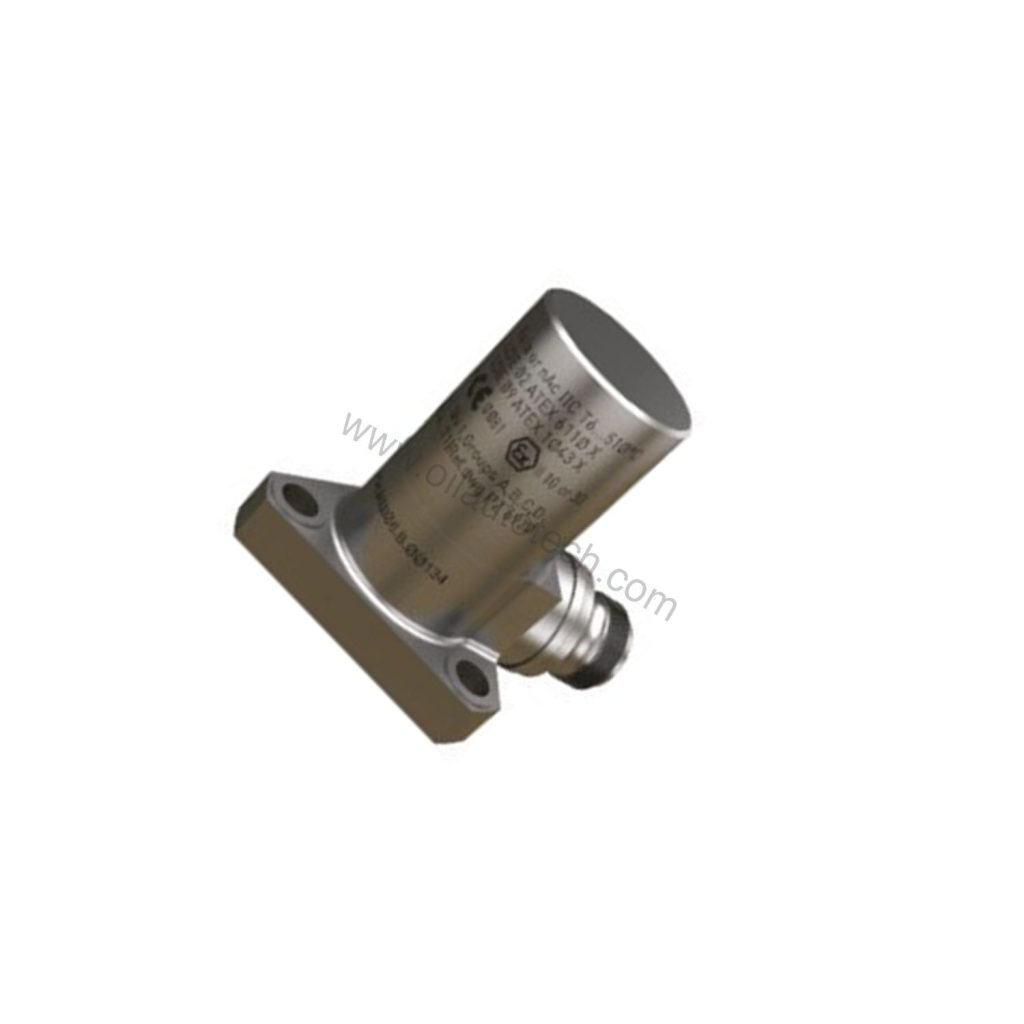
Industrial condition monitoring has evolved from simple vibration switches to precision piezoelectric accelerometers that survive where ordinary sensors fail. The Vibro Meter 144-901-000-601 piezoelectric accelerometer represents that evolution. It is a charge output sensor built for loose part monitoring and extreme temperature applications.
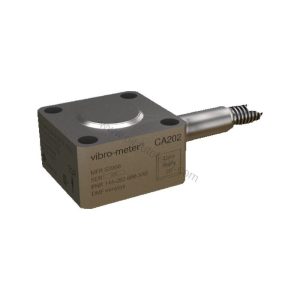
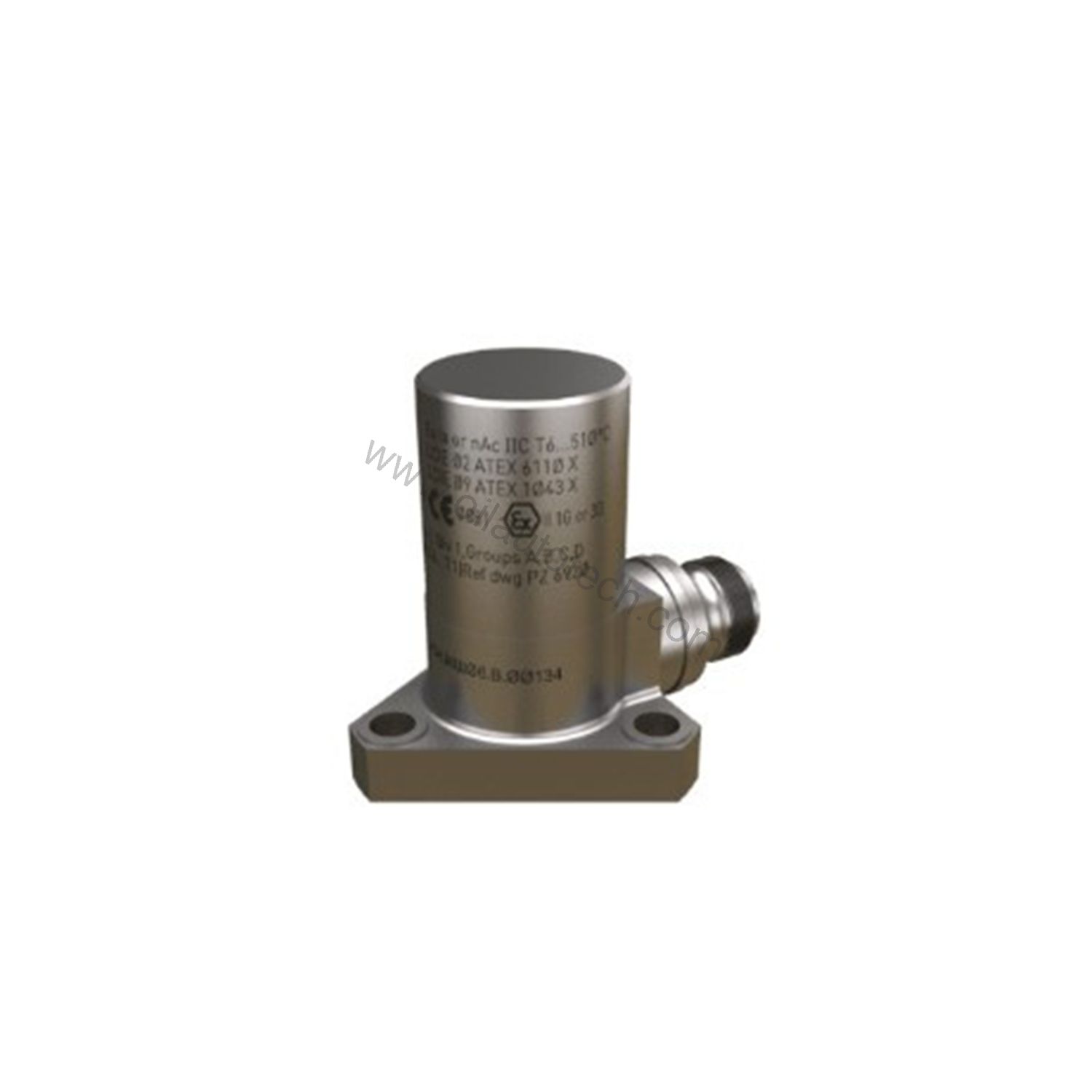
This accelerometer operates without input power. It uses a 2-pole system insulated from the casing and delivers a charge output processed by an external charge converter. The 144-901-000-601 comes with a 5 m cable and a Lemo connector, ready for demanding installations.
Technical Specifications That Matter
| Specification | Value |
|---|---|
| Sensitivity (at 120 Hz) | 10 pC/g ±5% |
| Dynamic measuring range | 0.001 g to 200 g peak |
| Overload capacity (spikes) | Up to 500 g peak |
| Frequency response | 3 Hz to 2800 Hz nominal, ±5% |
| Resonance frequency (mounted) | > 17 kHz nominal |
| Continuous temperature range | -54°C to +650°C |
| Extreme temperature range | -196°C to +700°C |
| Pressure | 140 bar at 23°C, 80 bar at 300°C |
| Mounting | 4 Allen screws M6, 15 Nm torque |
| Hazardous area certification | LCIE 08 ATEX 6017 X II 1 G (Zones 0, 1, 2) |
| Cable length | 5 m |
The 10 pC/g sensitivity provides a strong signal for charge converters. The wide dynamic range captures both tiny vibrations and severe spikes. Linearity stays within ±1%, so readings remain trustworthy across the full range.
Built for Oil, Gas, and Power Generation
Loose part monitoring on turbine casings demands a sensor that survives heat, pressure, and radiation. The 144-901-000-601 handles continuous temperatures up to +650°C and extreme excursions to +700°C. Its Inconel 600 hermetically welded housing resists corrosion and humidity.
In explosive atmospheres, the ATEX certification for Zones 0, 1, and 2 allows direct installation. Radiation tolerance is proven: gamma flux at 1011 erg/g and neutron flux at 1018 n/cm2 cause no effect. These traits make the sensor practical for nuclear and petrochemical plants.
Installation and Integration Notes
Mount the accelerometer inside a tube using four M6 Allen screws at 15 Nm torque. The integral case insulation prevents ground loops. A 2-pole insulated system separates the charge signal from the casing.
Connect the Lemo connector to a suitable charge converter. The lower cutoff frequency depends on the electronics you pair with the sensor. For fieldbus networks, wiring may require an external gateway or connection module. Confirm cables and gateways with your supplier before commissioning.
Reliability and Maintenance
Inspect the mounting torque periodically. Check the cable and connector for mechanical damage. The hermetically welded Inconel 600 body needs no internal service. Follow the manufacturer’s safety manual for all maintenance in hazardous areas.
Please verify current lifecycle status and availability with Oil AutoTech before ordering.
FAQs
Q: What is the sensitivity of the 144-901-000-601?
A: It delivers 10 pC/g ±5% at 120 Hz.
Q: Can this accelerometer operate without external power?
A: Yes. It requires no input power and produces a charge output.
Q: What temperature range does the sensor cover?
A: Continuous operation is -54°C to +650°C. Extreme excursions reach -196°C to +700°C.
Q: Is the 144-901-000-601 certified for explosive atmospheres?
A: Yes. It holds LCIE 08 ATEX 6017 X II 1 G certification for Zones 0, 1, and 2.
Q: What cable length comes with this model?
A: The 144-901-000-601 includes a 5 m cable with a Lemo connector.