Product Overview
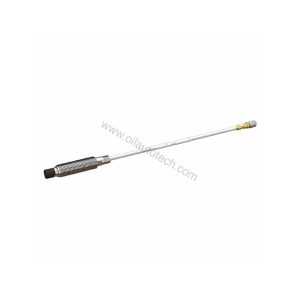
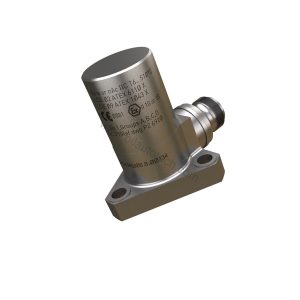
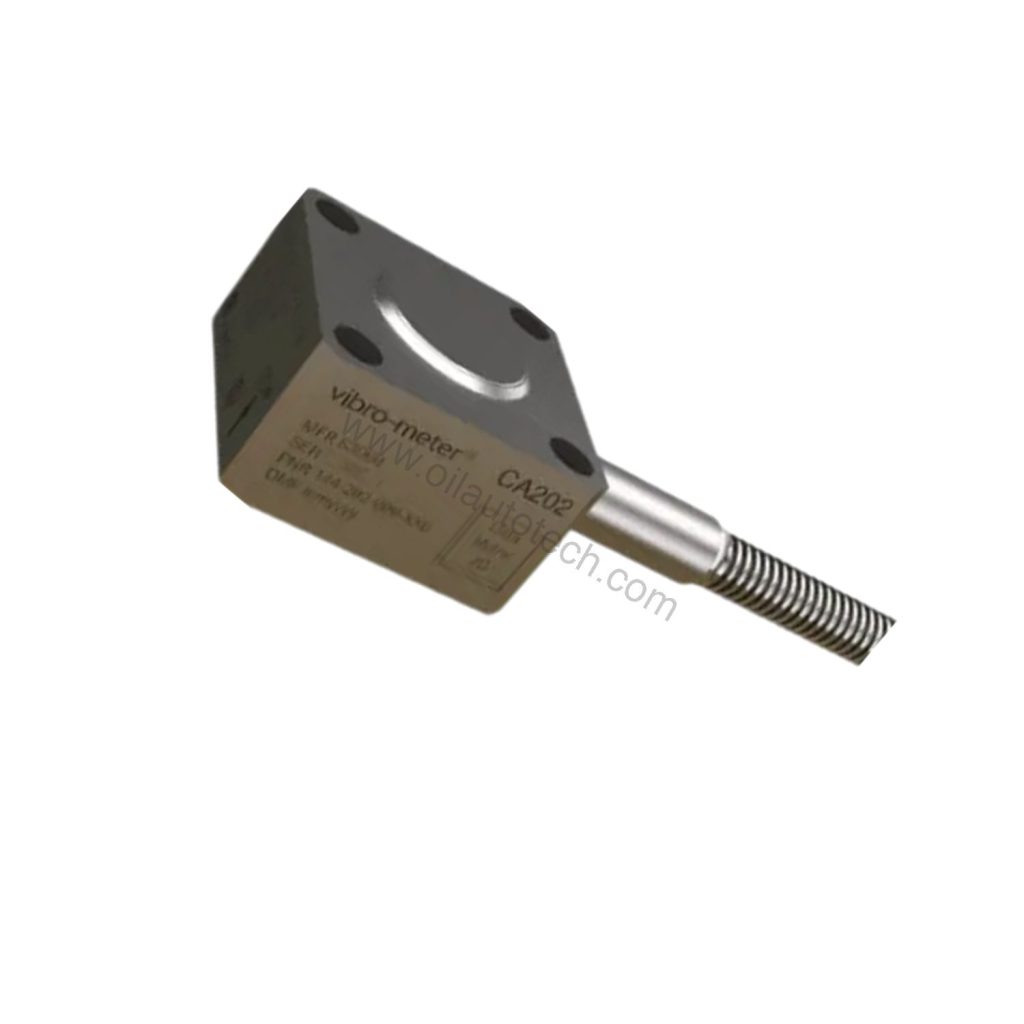
When vibration monitoring fails in a harsh plant environment, unplanned downtime follows. The Vibro Meter CA202 piezoelectric accelerometer, part number 144-202-000-206, is built for exactly those conditions. This standard version ships with a 3 m integral cable and a hermetically welded stainless-steel protection hose. It delivers reliable charge output for heavy-duty industrial vibration monitoring.
Technical Specifications
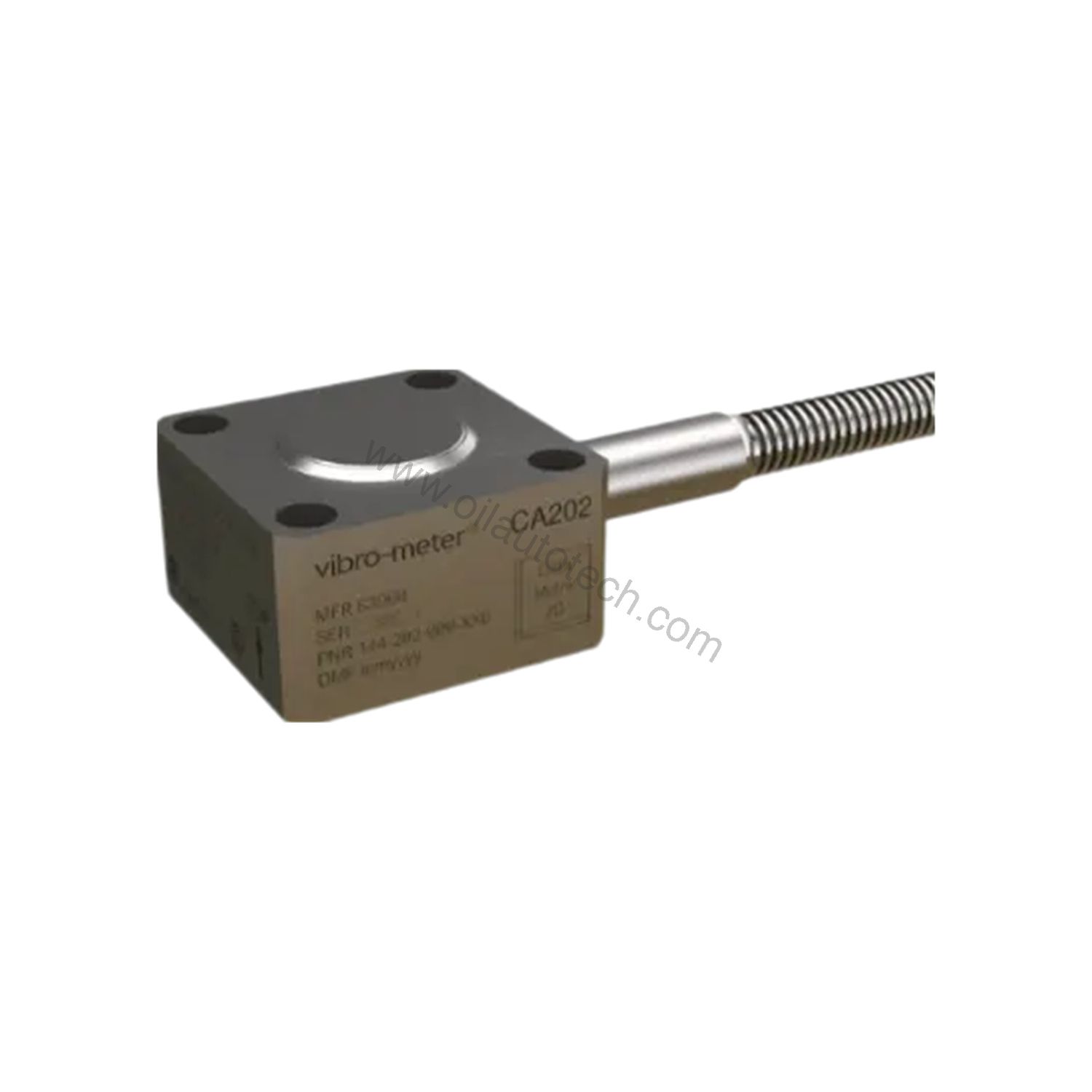
The CA202 uses a symmetrical shear-mode polycrystalline element with internal case insulation. Sensitivity is 100 pC/g ±5% at 120 Hz. The dynamic measurement range spans 0.01 to 400 g peak, with overload capacity up to 500 g peak. Frequency response is 0.5 to 6000 Hz ±5%, and resonant frequency exceeds 22 kHz nominal. Linearity is ±1% from 0.01 to 20 g peak and ±2% from 20 to 400 g peak. The sensor operates continuously from −55 to +260°C, while the integral cable handles −55 to +200°C. The austenitic stainless-steel case and heat-resistant hose resist humidity, steam, oil, and sea-salt atmospheres. The unit requires no input power and terminates with flying leads.
Buyer’s Guide: Matching the CA202 to Your Application
Before ordering, verify your signal conditioner. The CA202 outputs a charge signal through a 2-pin system insulated from case. A charge converter such as the IPC70x signal conditioner is required. Confirm your measurement range: 0.01 to 400 g peak covers most industrial machinery. Check the temperature at the mounting point. The sensor survives short-term exposure to −70 to +280°C, but the cable is limited to −55 to +200°C continuous. For hazardous areas, Ex versions exist, but this standard version suits non-hazardous locations. Mounting uses four M6 × 35 Allen screws and four M4 spring-lock washers at 15 Nm torque. The sensor weighs 250 g; the cable adds 135 g/m. Ensure your data acquisition supports a charge input or plan for an inline charge converter.
Applications and Integration
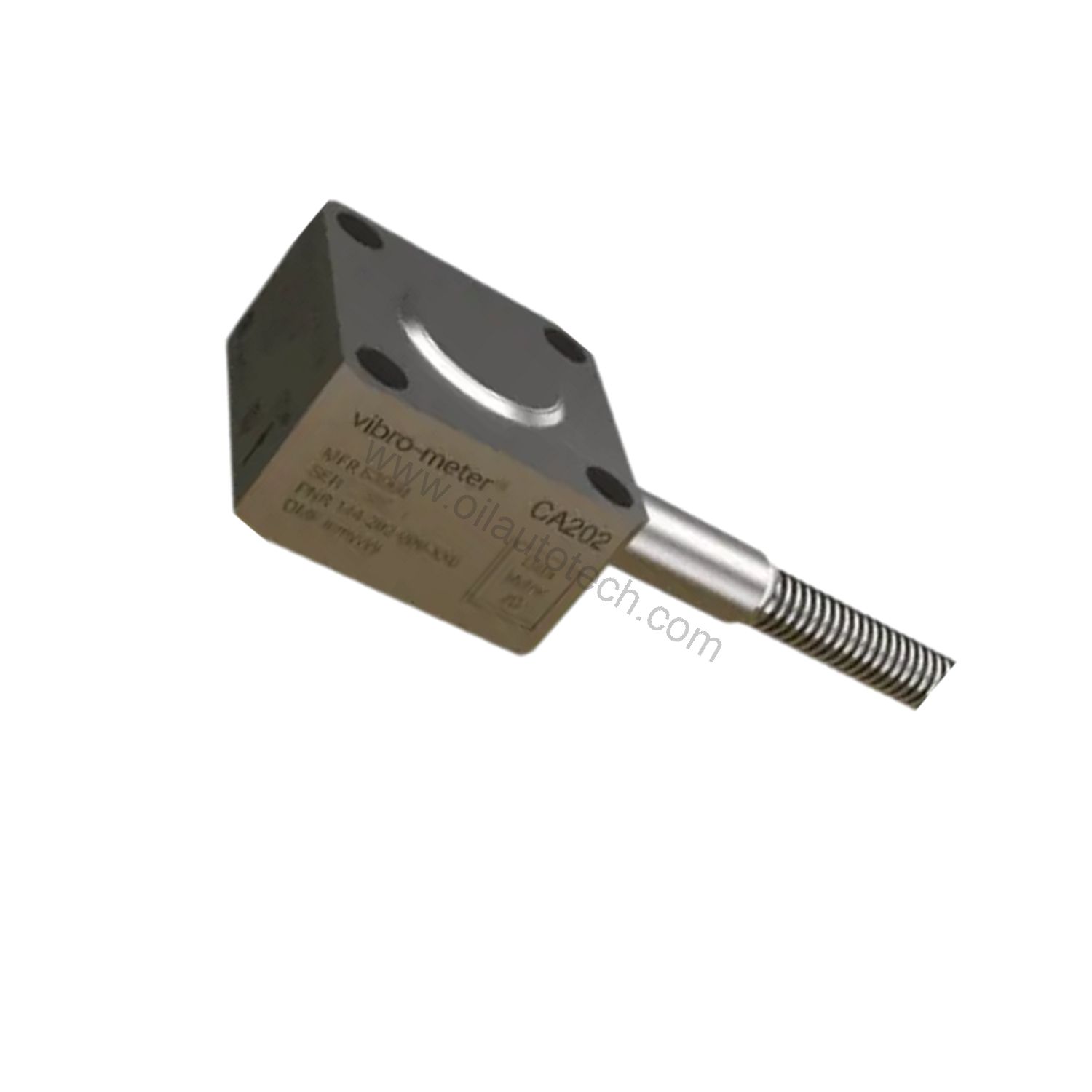
Industrial vibration monitoring on pumps, compressors, and turbines benefits from the CA202’s wide frequency range and high sensitivity. In harsh environments, the hermetically welded assembly resists dust, fungus, and sand. The differential output and internal case insulation help reject ground loops and noise. For integration, the flying leads connect to your charge converter or monitoring system. If your setup uses a fieldbus network, you may need an external gateway or connection module. Confirm cable lengths and connectors with your supplier before installation.
Maintenance and Reliability
Inspect the integral cable and protection hose periodically for mechanical damage. The stainless-steel construction minimizes corrosion, but check mounting torque annually. The CA202 has no moving parts, so wear is minimal. Keep the connector dry and clean. For safety-related systems, follow the manufacturer’s safety manual and inspect at recommended intervals. Oil AutoTech provides hands-on technical selection help and fast dispatch, worldwide. Contact Oil AutoTech today for pricing and availability.
Frequently Asked Questions
Q: What signal conditioner works with the 144-202-000-206?
A: The CA202 requires a charge converter, such as the IPC70x signal conditioner, to process its 100 pC/g output.
Q: Can I use this sensor in a hazardous area?
A: This standard version is for non-hazardous areas. Ex versions are available for potentially explosive atmospheres; contact Oil AutoTech for details.
Q: What is the maximum temperature for continuous operation?
A: The sensor handles −55 to +260°C continuously, while the integral cable is limited to −55 to +200°C.
Q: How do I mount the accelerometer?
A: Use four M6 × 35 Allen screws and four M4 spring-lock washers, tightened to 15 Nm.
Q: Does the CA202 need external power?
A: No. It is a passive charge-output sensor requiring no input power.