When Eight Sensors, One Chassis, and No Room for Error Collide
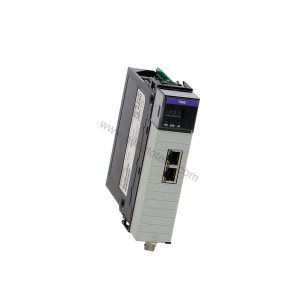
A process engineer is commissioning a reactor skid. Eight temperature points must feed one ControlLogix chassis: six thermocouples on the vessel, two RTDs on the jacket. The old approach meant separate modules, extra power supplies, and a cabinet that keeps growing. The Allen-Bradley 1756-IRT8I solves that problem directly. It is an 8-point isolated combined temperature and millivolts-sensing input module for the ControlLogix system, built by Allen-Bradley/Rockwell Automation. Each channel works independently in RTD, thermocouple, or millivolt mode, so one module covers the whole skid.
What the 1756-IRT8I Actually Does
The module converts sensor signals through a Sigma-Delta analog-to-digital method and stores results as IEEE 32-bit floating point data. That data feeds HMIs, SCADA systems, DCS platforms, and PID calculations without extra conditioning. Eight individually isolated channels mean a fault on one loop does not drag down its neighbors. Isolation is rated 250 Volts continuous. Two CJC sensors support thermocouple use, with local and remote CJC accuracy of +/- 0.3 degrees Celsius. Channels configured for thermocouple inputs perform lead resistance self-calibration when module power is cycled. The sampling rate follows the RPI value, since this module does not offer an RTS parameter.
Technical Specifications
| Specification | Value |
|---|---|
| Module Type | Analog RTD / Thermocouple / Millivolt Module |
| Inputs | 8 Isolated Channels |
| Input Range | 1…500 Ohm; 2…1000 Ohm; 4…2000 Ohm; 8…4000 Ohm; -100…100 mV |
| Resolution | 24 bits |
| Data Format | IEEE 32-bit floating point |
| Isolation Voltage | 250 Volts Continuous |
| Module Scan Time | 1 ms |
| Power Dissipation (Maximum) | 4.6 Watts |
| Thermal Dissipation | 15.7 BTU per hour |
| RTD Excitation Current | 600 microamps |
| Thermocouple Types | B, C, D, E, J, K, N, R, S, T, TXK/XK (L) |
| Thermocouple Linearization | ITS-90 |
| Removable Terminal Blocks | 1756-TBNH, 1756-TBS6H |
Reading the Resolution Numbers
At 24-bit resolution, the module resolves 0…510 Ohm at 0.06 milliohms per count and -101…101 mV at 0.01 microvolts per count. In practice, that means tight temperature control loops stay tight. Supported RTDs include 100, 200, 500, and 1000 Ohm platinum (alpha=385 and alpha=3916), 120 Ohm nickel (alpha=672), 100, 120, 200, and 500 Ohm nickel (alpha=618), and 10 Ohm copper (alpha=427).
Where It Fits in Oil, Gas, and Process Plants
In upstream oil and gas, the 1756-IRT8I monitors wellhead temperatures and compressor bearing RTDs from a single chassis slot. Refineries use the millivolt range for direct sensor signals where a transmitter would add cost and failure points. Power and chemical plants rely on the isolated channels to keep grounded and ungrounded sensors on the same module without cross-talk. The common thread: fewer modules, less panel space, and lower power supply demand.
Integration and Maintenance Notes
The module requires a 36-pin RTB, either the 1756-TBS6H or the 1756-TBCH. Open circuit detection times are 2 seconds for thermocouple and 3-wire RTD inputs, and 5 seconds for 4-wire RTD inputs. Note that no open circuit detection occurs when wires are simultaneously disconnected from the INx/RTD C and INx/RTD D terminals on the same channel. Noise rejection is 75 dB at 60 Hertz in normal mode. Inspect terminal blocks periodically and follow the manufacturer’s safety manual for all maintenance. Please verify current lifecycle status and availability with Oil AutoTech before ordering.
Selection Checklist
Before buying, confirm your sensor types against the supported RTD and thermocouple list, verify your input range needs, and confirm the terminal block part number. Oil AutoTech offers hands-on technical selection help and fast-dispatch spares for oil, gas, and industrial automation. Contact Oil AutoTech today for pricing and availability.