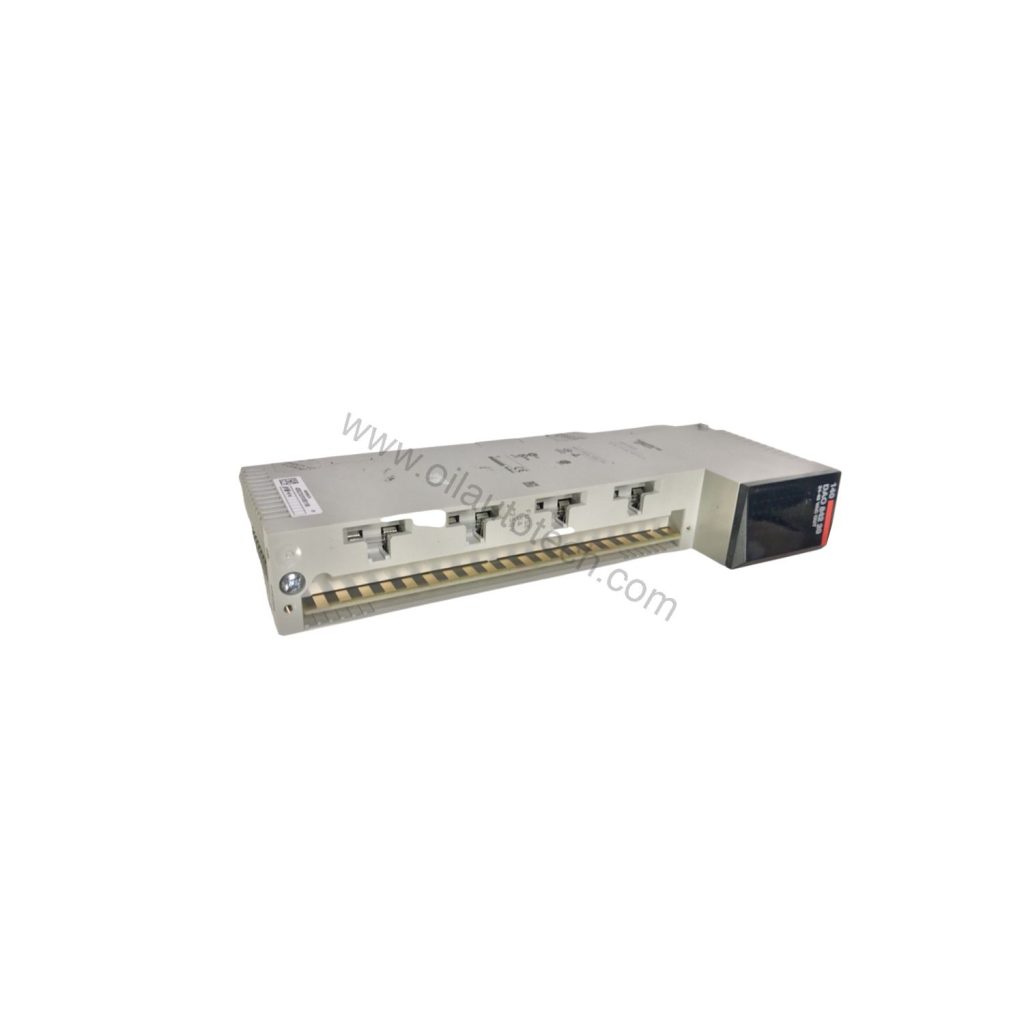
140DAO84220: A Practical Replacement Path for Modicon Quantum AC Outputs
Maintenance engineers running Modicon Quantum systems know the drill: an output module fails, the line stops, and the search for a drop-in spare begins. The 140DAO84220 from Schneider Electric is a 16-point AC Triac discrete output module built for exactly that environment. It handles low-voltage AC switching across four isolated groups, and it remains a familiar sight in oil, gas, and heavy industrial control cabinets.
This module is now discontinued (End of Sale). That changes the buying conversation. You are no longer sourcing new production — you are sourcing verified, ready-to-ship stock. Oil AutoTech focuses on fast-dispatch spares for oil, gas, and industrial automation, so the practical question is availability, not catalog status.
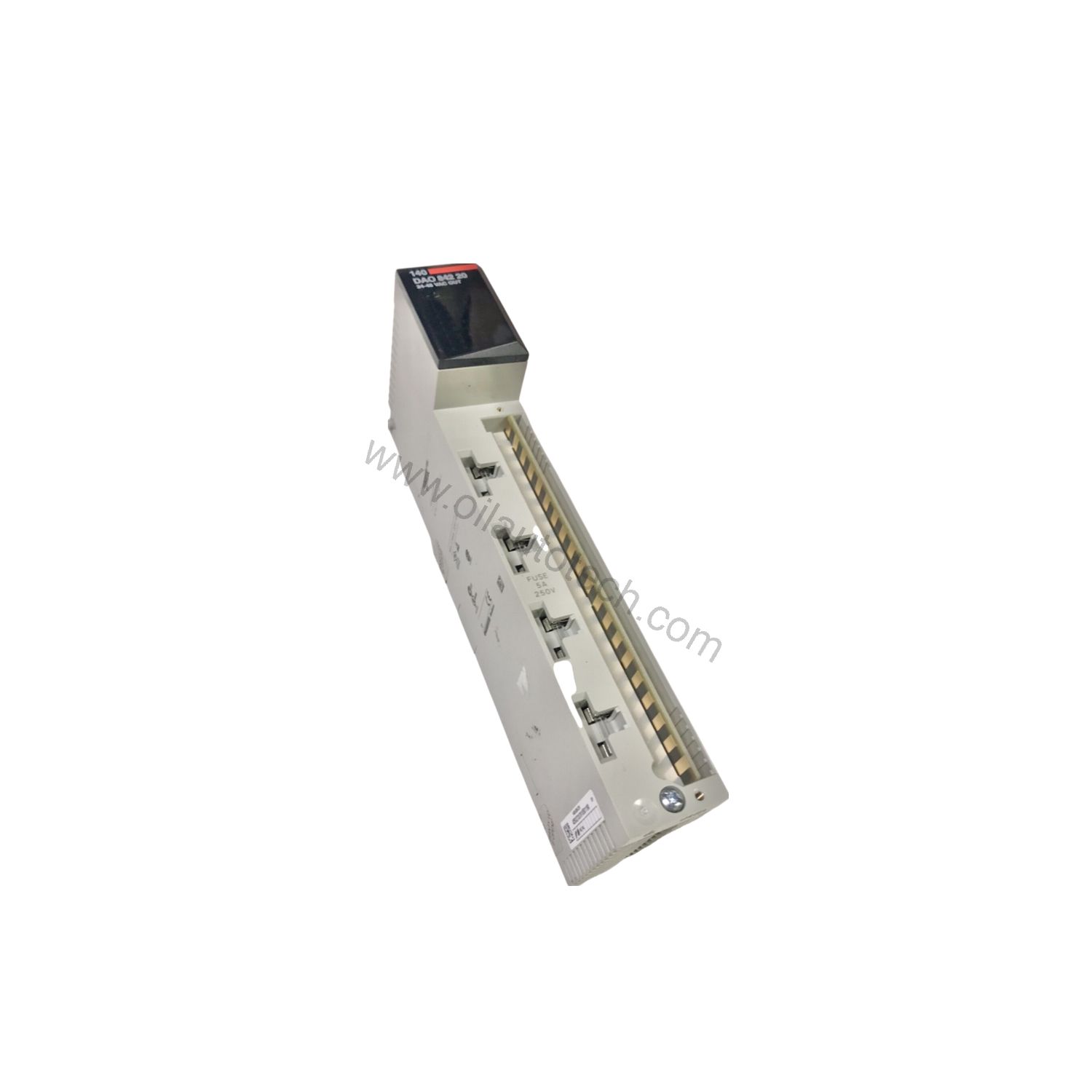
What the 140DAO84220 Actually Does in Your Panel
The module provides 16 AC output points arranged as 4 groups of 4. Each output uses a bidirectional thyristor (Triac) rated for 20 to 56 V AC. Per-output current sits at 4 A rms, per-group at 4 A rms, and the full module at 16 A rms. Group-to-group isolation keeps faulted circuits from dragging down healthy ones — a real advantage when one field device shorts.
Response time is 0.5 ms typical with zero-crossing switching. For AC loads like solenoids, small contactors, and pilot valves, that zero-cross behavior reduces electrical noise and extends contactor life. The module occupies a single slot and draws 350 mA at 5 V DC from the backplane, with power consumption calculated as 1.85 W plus 1.1 V times total load current.
Key Technical Parameters
| Specification | Value |
|---|---|
| Model | 140DAO84220 |
| Brand / Series | Schneider Electric / Modicon Quantum |
| Channels | 16 points (4 groups × 4) |
| Signal type | AC output, Triac (bidirectional thyristor) |
| Voltage range | 20 to 56 V AC |
| Output current | 4 A rms per output; 4 A rms per group; 16 A rms per module |
| Isolation | Group-to-group isolation |
| Diagnostics | Blown fuse, loss of field power (LED indication) |
| Response time | 0.5 ms typical (zero-crossing triac) |
| Slots required | 1 |
| Supply voltage | 5 V DC (backplane) |
| Bus current | 350 mA @ 5 V DC |
| Power consumption | 1.85 W + (1.1 V × total load current) |
| Protection rating | IP20 |
| Dimensions (H×W×D) | 250 × 40.34 × 103.85 mm |
| Weight | 0.3 kg |
Where This Module Fits on the Plant Floor
AC Triac outputs suit applications where the load runs on low-voltage AC and switching frequency is moderate. Three common scenarios stand out.
Pilot valve and solenoid banks. In gas compression or wellhead control panels, groups of AC solenoids fire in sequence. The 4 A rms per-output rating gives headroom for inrush, and group isolation means a shorted coil does not take down the other twelve points.
Small AC contactor control. Motor starters and heater contactors often use low-voltage AC coils. Zero-crossing switching reduces arcing at the contacts and lowers conducted noise on the panel’s control bus.
Legacy Quantum line replacement. When an existing 140DAO84220 fails, the fastest path back to production is a verified spare. Because the series is discontinued, engineers should confirm stock before committing to a repair schedule. Oil AutoTech provides hands-on technical selection help to match the exact revision you need.
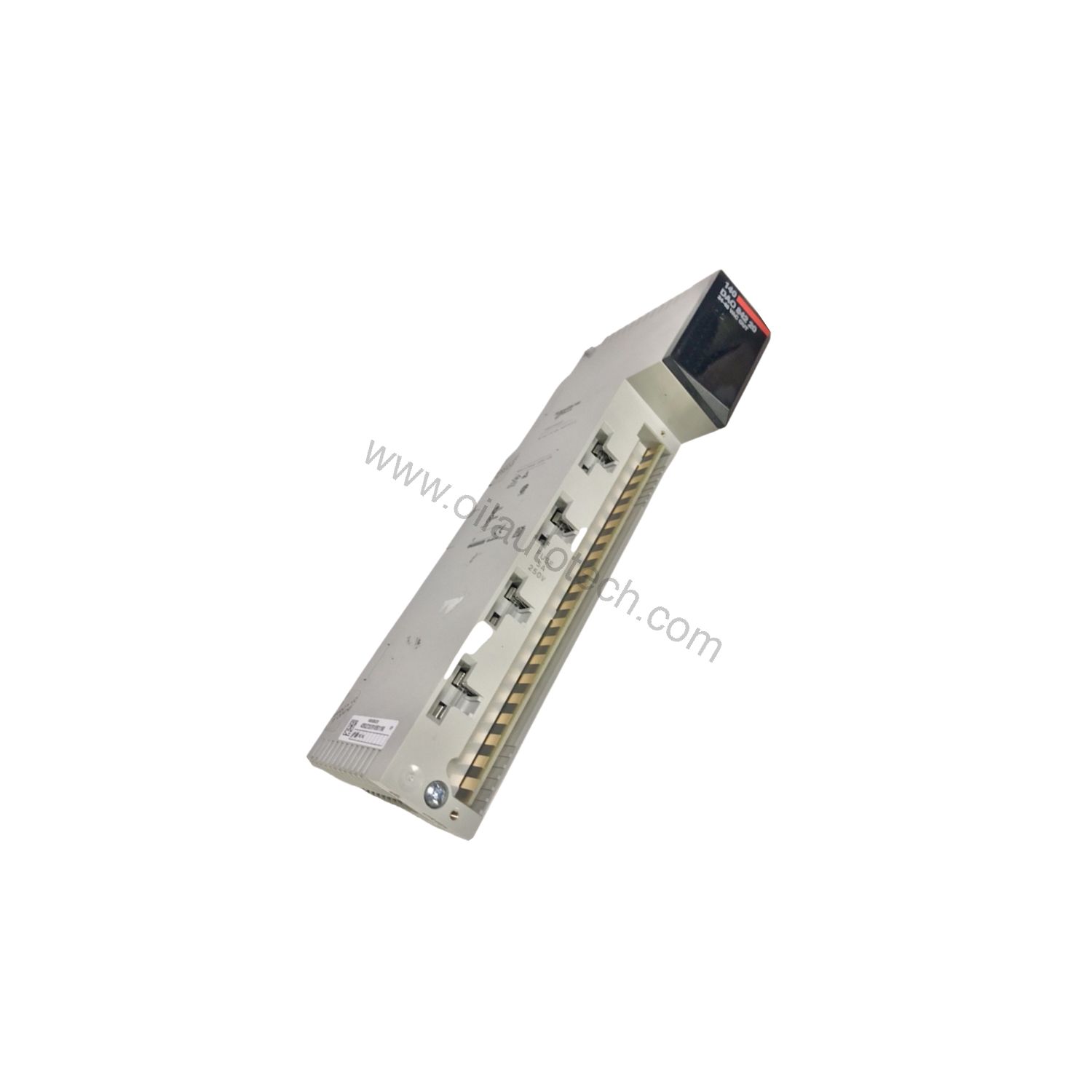
Installation and Wiring Notes
The module installs in a single Quantum backplane slot. Wiring follows the standard terminal arrangement for the series, with field power brought to the group commons. Keep AC field wiring separated from low-level analog and communication cabling to avoid induced noise.
Because the outputs are Triac-based, verify that your load current stays within the 4 A rms per-output limit and that total module current does not exceed 16 A rms. The IP20 rating means the module belongs inside a clean, protected enclosure — not in a washdown or dusty open area.
Diagnostics You Can Use
Two LED indications matter during commissioning and troubleshooting: blown fuse and loss of field power. If outputs fail to energize, check field power first, then inspect the fuse. Group isolation lets you isolate the fault to one group of four points rather than the whole module.
Maintenance and Reliability Perspective
From a maintenance standpoint, the 140DAO84220 is a low-touch device. There are no moving parts and no calibration routine. The wear points are external: fuses, field wiring, and the loads themselves.
A practical inspection interval is during scheduled panel shutdowns. Check terminal torque, look for discoloration around output terminals, and confirm that diagnostic LEDs behave correctly during a test cycle. Because the module is discontinued, keeping one verified spare on the shelf is a sensible reliability investment. Downtime cost usually dwarfs the price of a spare module.
Compatibility and Integration
The 140DAO84220 belongs to the Modicon Quantum platform and communicates through the Quantum backplane. It works alongside other Quantum I/O modules in the same rack and is configured through the standard Quantum engineering environment.
If your architecture bridges Quantum I/O to a modern fieldbus or control network, confirm the gateway or communication module requirements with your supplier. Oil AutoTech can help verify that the surrounding hardware matches your existing installation.
Selection Checklist Before You Buy
Before ordering a 140DAO84220, confirm four things: the exact model number on the failed module, the AC voltage range of your field devices, the total current draw per group, and the number of spare slots in your rack. Also verify whether your application needs the group-isolated configuration this module provides.
Because the product is discontinued, lifecycle status and availability should be verified before you commit. Contact Oil AutoTech today for pricing and availability — fast dispatch, worldwide.
Frequently Asked Questions
Is the 140DAO84220 still in production?
No. Schneider Electric lists this module as discontinued (End of Sale). Availability depends on remaining verified stock, so confirm with Oil AutoTech before planning a replacement.
Can I use this module for DC loads?
No. The 140DAO84220 uses AC Triac outputs rated for 20 to 56 V AC. DC switching requires a different output module type.
What does group-to-group isolation mean in practice?
The 16 points are split into four groups of four. A fault in one group does not electrically affect the other groups, which simplifies troubleshooting and limits downtime.
How do I know if an output has failed?
Check the blown fuse and loss of field power LED indications first. If those are normal, verify the field wiring and load. Group isolation helps narrow the fault to a specific set of four points.
What should I keep on the shelf as a spare?
At minimum, one verified 140DAO84220 module and the correct fuses for your panel. Because the series is discontinued, spare availability may tighten over time.